01 Apr 2026

Beyond Green Pledges: How Tokenization Accelerates Corporate Climate Actions?

Walking the floor at Consensus Hong Kong 2026, the message was clear: The hype phase is over. The utility phase is here. What can be the practical impact of tokenization?
gft-contact-lomi.png
Lomi Hou
Web3 Solution Director
blogAbstractMinutes
blogAbstractTimeReading
genericImageAlt
Asset Management
DLT and Blockchain
Digital Currencies and E-Money
Sustainable Finance
download
contact
share
At a time when energy markets face both short-term shocks and long-term sustainability pressures, financial institutions must rethink how capital is allocated and managed. Tokenization is emerging as a critical enabler—transforming ESG data into transparent, real-time, and investable climate assets. By combining blockchain, AI, and IoT, it enables more resilient, efficient, and scalable green finance.

By 2026, the global tokenization conversation has shifted from “can we issue on-chain” to “what should be on-chain to improve real-world outcomes?” As custody, settlement, and compliance models mature across jurisdictions, tokenization is increasingly judged by measurable utility rather than narrative. In climate and energy market, that means using tokenization to make environmental performance auditable, financeable, and operationally useful.

The Tokenization Opportunity

According to PwC, the global carbon credit market is projected to reach $100 billion by 2030. Beyond carbon, the Environmental, Social, and Governance (ESG) and green finance ecosystem presents a significantly larger opportunity:

  • ESG assets expected to reach $40 trillion by 2030 (Bloomberg Intelligence, ESG AUM forecast widely cited)
  • Green finance approaching $9–10 trillion by the early 2030s (forecast; definition varies)
  • For context, energy transition investment reached $1.77 trillion in 2023 (BloombergNEF) and cumulative green bond issuance has surpassed $2 trillion (Climate Bonds Initiative)

The practical impact of tokenization is not just about trading digital assets; it is about making climate action programmable, granular, and liquid, shifting from “green claims” to “green cashflows”.

The Four-Pillar Framework makes this shift real.

1. Granular Data: From Internet of Things (IoT) Sensor to Immutable on-chain records driven Digital Measurement, Reporting & Verification (MRV)

The foundation of credible green finance is trustworthy data. Today, most environmental reporting relies on quarterly aggregates, manual audits, and self-declared estimates.

The Architecture:
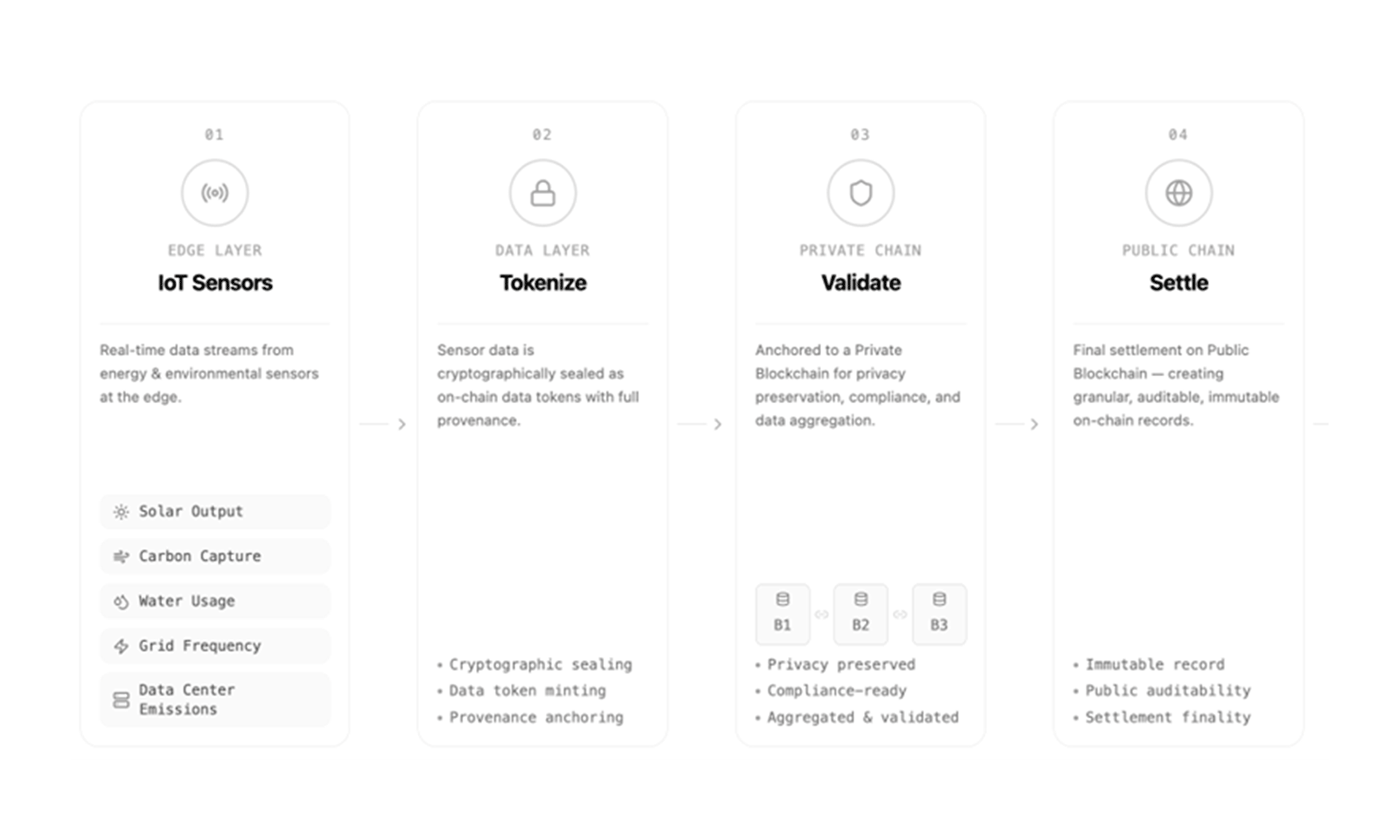
Tokenization begins at the edge. IoT/device sensors, measuring solar output, carbon capture, water usage, grid frequency or data center emissions, generate real-time data streams. This data is cryptographically sealed (on-chain data tokens) and anchored to a Private Blockchain Layer for privacy preservation and compliance, then aggregated and validated before settlement on a Public Blockchain.

genericImageAlt

The Outcome
This creates a granular, auditable, and immutable on-chain record that can serve dual purposes:

  • Internally: for carbon accounting, Scope 1/2/3 calculation, and operational optimization
  • Externally: for regulatory reporting, ESG ratings, green bond compliance, and investor disclosure

This is the essence of Digital MRV: transforming raw sensor readings into financially-grade, machine-readable evidence, anchored on-chain with full provenance.

Once climate data is tokenized, it becomes composable. It can be attached to green financial instruments, such as tokenized green bonds, enabling real-time impact visibility and traceability.

  • GFT in practice: Project Genesis 1.0: Together with Digital Asset and Allinfra, GFT delivered a prototype of a tokenized retail green bond with embedded real-time green-impact tracking, developed under the BIS Innovation Hub. The project demonstrated that investors could verify environmental performance continuously, not quarterly, and effectively avoid greenwashing.
  • Emerging example: Digital IDs for EV Batteries: China is introducing digital identity frameworks for EV batteries to enhance lifecycle tracking and accountability for recycling. The same architecture could be extended to track embedded carbon footprints across the supply chain, a potential capability as the EU's Carbon Border Adjustment Mechanism (CBAM) begins imposing levies on carbon-intensive imports. Tokenized battery passports could streamline CBAM compliance and cross-border carbon accounting. Also, in Europe, BatteryPass-Ready is building a test environment to help industry and policymakers prepare for the EU battery passport—supporting conformity assessment of battery passport solutions, data quality validation, and more standardized implementation.

2. Green token Finance: unlocking new capital pathways

  • Monetized environmental attributes
    Consider a small-scale 2 Megawatt (MW) solar farm. Historically, monetizing the associated Renewable Energy Certificate (REC) was prohibitively complex, involving intermediaries, registries, and minimum volume thresholds. Tokenization removes these barriers. The asset owner can issue a renewable energy token representing that solar farm environmental attribute and sell it directly on any Web3 marketplace (e.g., GreenBTC Club).
  • New asset classes: Mitigation Outcome Interest (MOIs)
    In BIS Project Genesis 2.0: This prototype extended the green bond model further, allowing green asset owners to borrow against the forward delivery of tokenized carbon credits, creating a new asset class called Mitigation Outcome Interests (MOIs). This unlocks working capital for climate projects before the carbon is even sequestered, accelerating the financing of real-world impact.
  • Real-time impact monitoring via On-Chain KPIs
    For asset managers and impact investors, tokenized green bonds can embed automated reporting and on-chain KPIs, eliminating the lag between environmental performance and investor visibility. Portfolio-level ESG compliance becomes real-time rather than periodic.
  • Fractional ownership and capital democratization
    Tokenization also enables fractional ownership of carbon credits and environmental assets, lowering the entry barrier for retail investors and smaller institutions. This democratization unlocks new pools of capital for green projects that were previously accessible only to large-ticket participants.

3. AI and Blockchain: toward automated carbon management

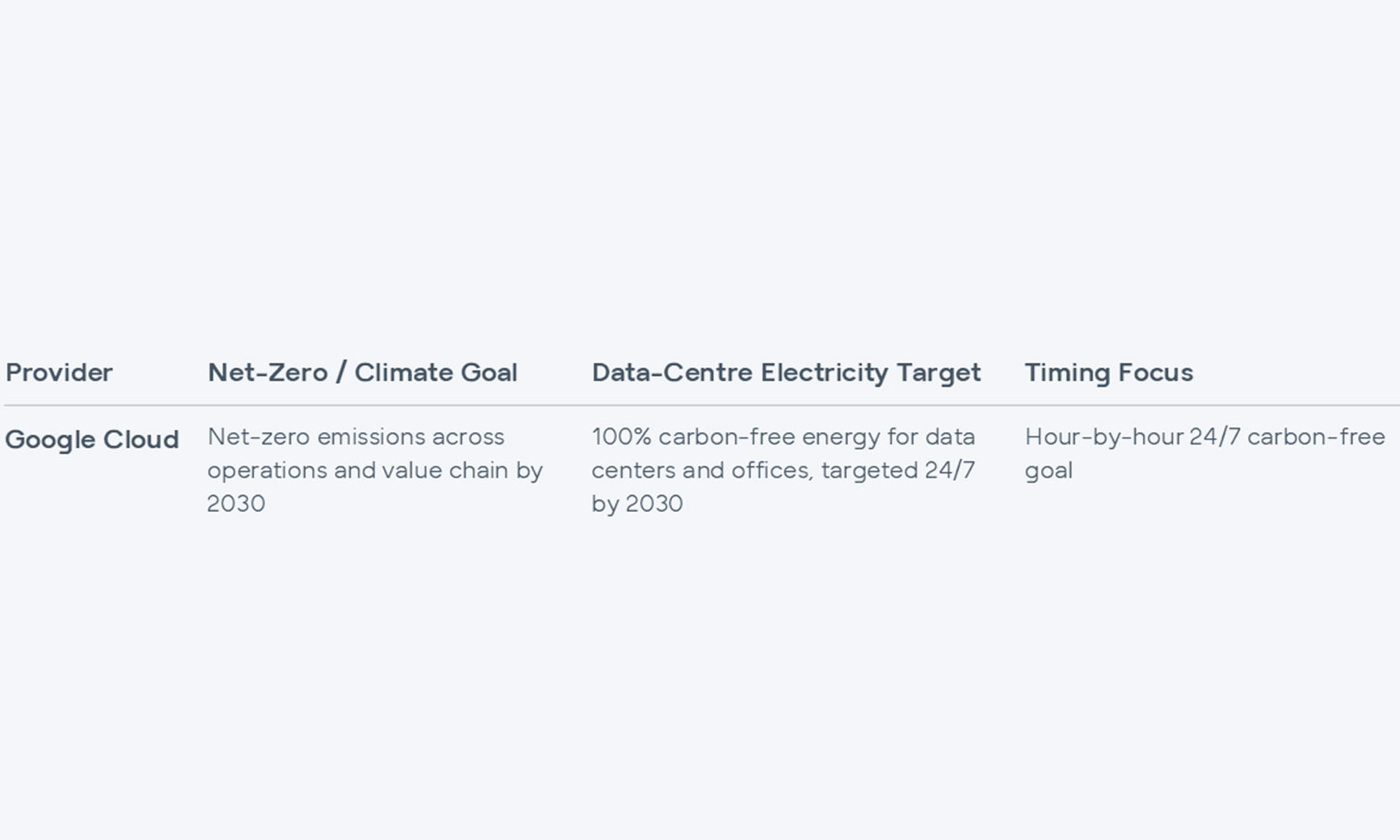
This is where the infrastructure story becomes transformative. Today, most corporate carbon offsetting operates on an annual matching basis, a company tallies its emissions at year-end and purchases credits retrospectively. But the climate does not operate on annual cycles, and neither do data centers.

genericImageAlt

Annual Matching vs Hour-by-Hour Marching

Google’s approach represents the future paradigm: every hour of consumption must be matched with a verified clean energy source in real-time. This is not a workflow that scales efficiently through manual processes alone. It is increasingly a workflow suited to automation, with AI agents able to monitor, evaluate, and execute against predefined carbon, quality, and price parameters.

  • Conceptual Solution Architect: Machine-Native Payments (x402)
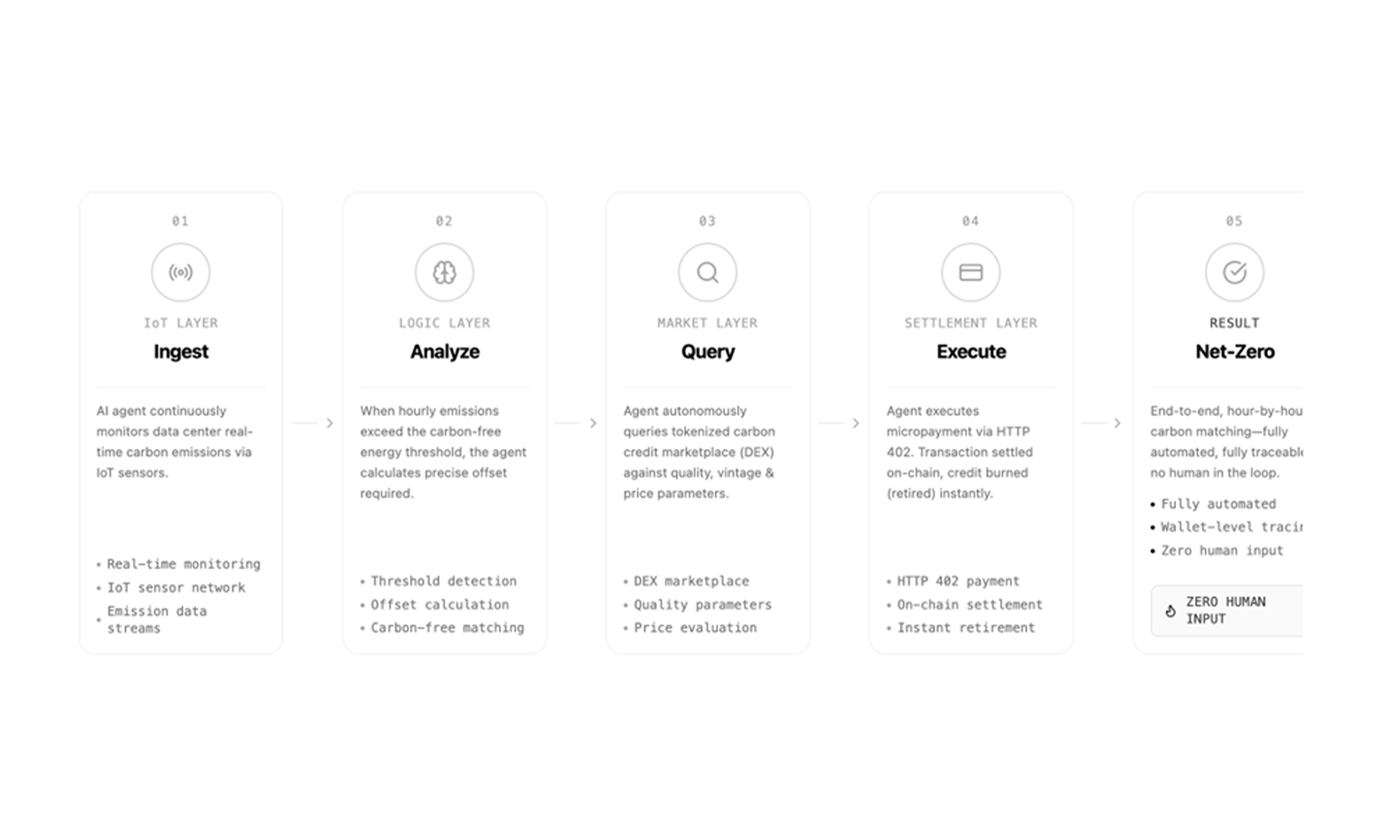
    Traditional online payments were built for people: logins, invoices, and settlement cycles. The x402 HTTP protocol introduces a machine-native payment standard: any AI agent can make instant crypto micropayments over standard web protocols, without subscriptions, API keys, or manual approval.
genericImageAlt
  • Applied to green finance, this unlocks a powerful new pattern:
    Imagine an AI agent continuously monitoring a data center’s real-time carbon emissions via IoT sensors. The moment hourly emissions exceed the carbon-free energy threshold, the agent autonomously queries a tokenized carbon credit marketplace, evaluates available credits against pre-set quality and price parameters, and executes a micropayment to purchase the precise offset required, all within seconds, settled on-chain. The result: end-to-end, hour-by-hour carbon matching, from emission detection to credit retirement, fully automated, fully traceable at the wallet and ledger level, with no human in the loop.

4. Liquidity: The Interoperability Imperative

None of the above reaches scale without liquidity. And liquidity requires two things: standardization and interoperability.

  • Standardization
    For tokenized carbon credits to achieve global fungibility, the market needs agreed-upon formats, metadata schemas, and verification protocols. Bridging protocols like Toucan (Toucan bridging protocol) have pioneered this by creating on-chain carbon pools that standardize heterogeneous off-chain credits into composable on-chain assets. But the market needs more, industry-wide taxonomies, registry interoperability, and regulatory alignment across jurisdictions.
  • Interoperability
    This is where the Universal Digital Payments Network (UDPN) becomes a potential critical infrastructure. UDPN enables tokenized environmental assets to be transacted using regulated digital currencies, stablecoins, tokenized deposits, and future CBDCs, across different banking chains and ledger networks seamlessly.

The convergence of IoT-driven granular data, blockchain-based tokenization, AI-agent automation via x402, and cross-chain liquidity via UDPN is not a futuristic vision. Each component exists today. The opportunity, and the challenge, is integration.

Tokenization will not decarbonize the economy on its own. But in a market shaped by energy volatility, regulatory pressure, and growing scrutiny of sustainability claims, it can make transition activity more measurable, enforceable, and financeable. The hard work now is operational: agreeing on data standards and assurance models, connecting on-chain representations to off-chain reality, and building interoperability across registries, banks, and jurisdictions. As regulatory regimes mature, from disclosure to product-level traceability (for example, the EU battery passport becoming mandatory from 18 February 2027 for in-scope batteries), financial institutions face a clear mandate: move from narrative-based ESG to evidence-based climate finance, with controls that stand up to audit and supervision. The institutions that lead will be those that treat green attributes in the same way they treat financial risk data: governed, machine-readable, and continuously verifiable. In that world, tokenization becomes less a “new asset class” and more the plumbing that turns climate intent into transparent, investable cashflows at scale.

At GFT, we are building this integration layer for financial institutions, corporates, and infrastructure providers across APAC. From Digital MRV architecture to tokenized green bond issuance to AI-agent payment workflows, we help our clients move from green pledges to provable, programmable, and liquid climate action.


Get in touch with our experts to learn more!

gft-contact-lomi.png

Lomi Hou

Web3 Solution Director
message
dataProtectionDeclaration