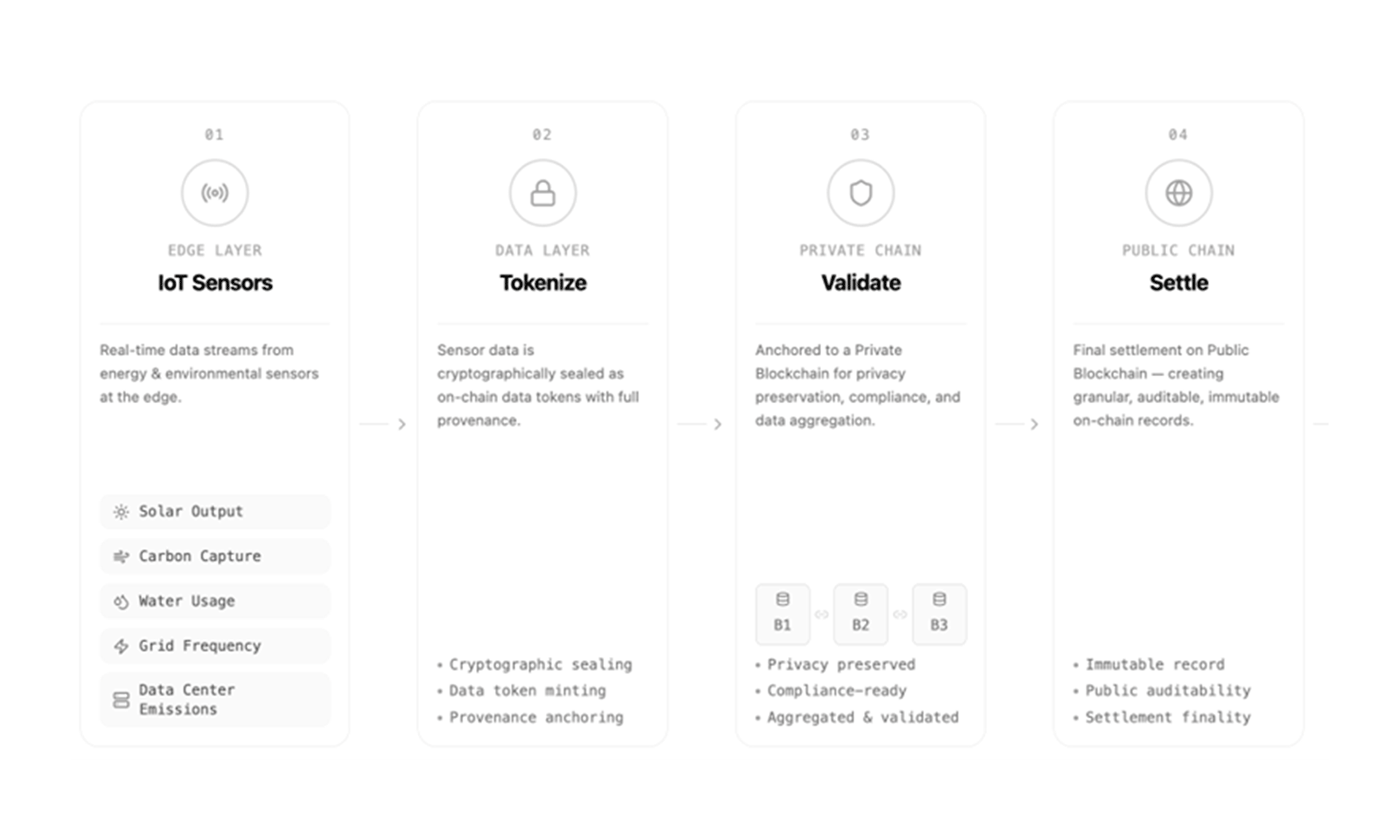
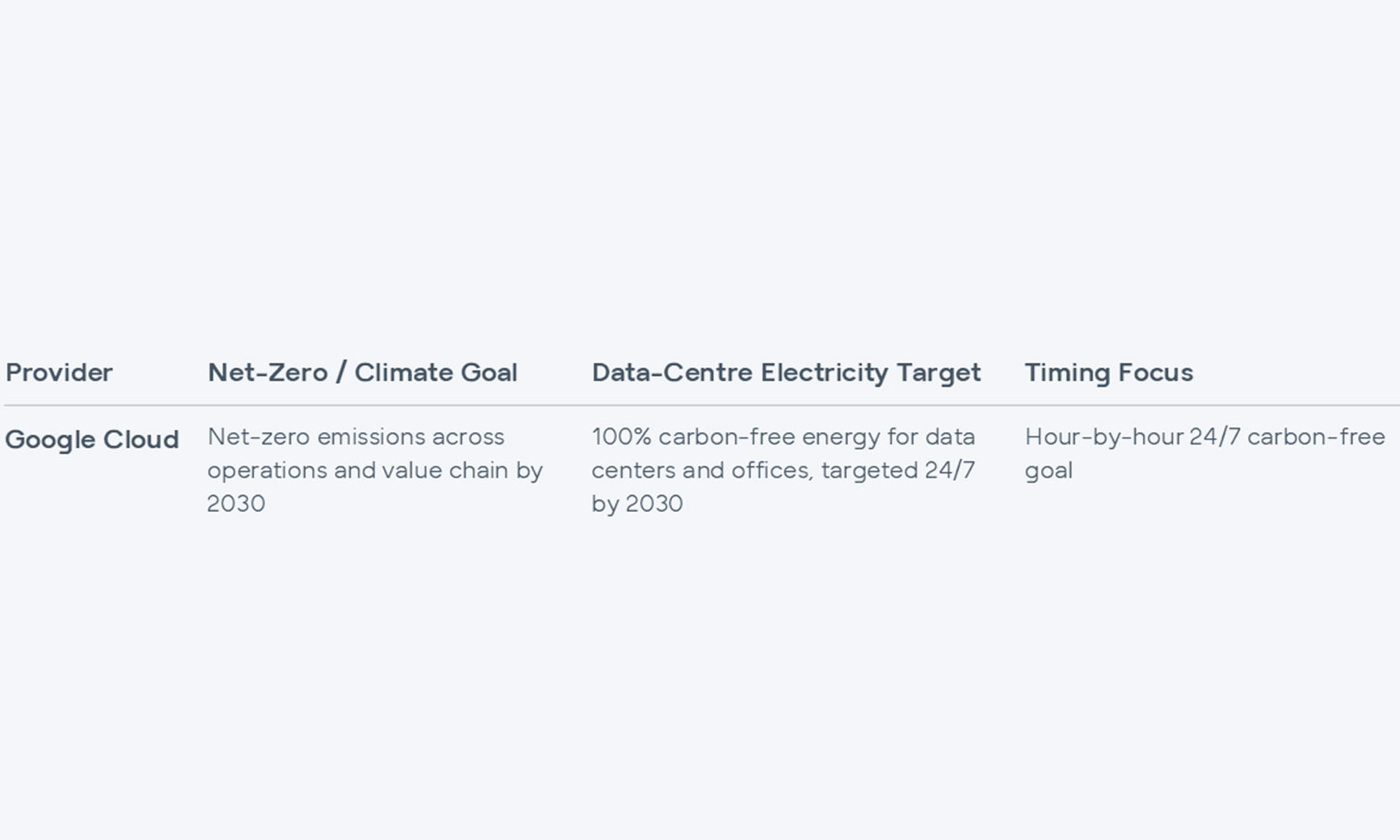
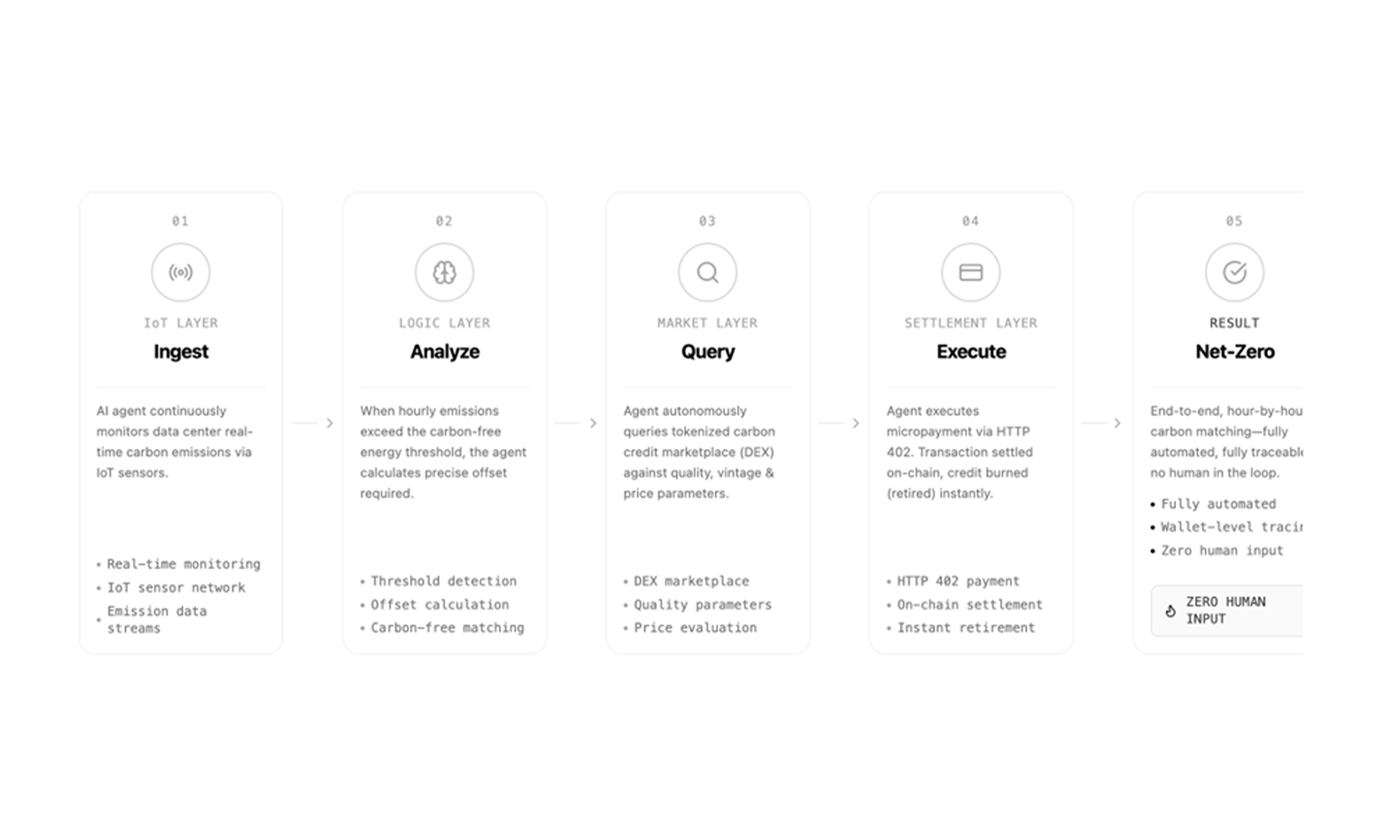
Google’s approach represents the future paradigm: every hour of consumption must be matched with a verified clean energy source in real-time. This is not a workflow that scales efficiently through manual processes alone. It is increasingly a workflow suited to automation, with AI agents able to monitor, evaluate, and execute against predefined carbon, quality, and price parameters.
- Conceptual Solution Architect: Machine-Native Payments (x402)
Traditional online payments were built for people: logins, invoices, and settlement cycles. The x402 HTTP protocol introduces a machine-native payment standard: any AI agent can make instant crypto micropayments over standard web protocols, without subscriptions, API keys, or manual approval.
4. Liquidity: The Interoperability Imperative
None of the above reaches scale without liquidity. And liquidity requires two things: standardization and interoperability.
- Standardization
For tokenized carbon credits to achieve global fungibility, the market needs agreed-upon formats, metadata schemas, and verification protocols. Bridging protocols like Toucan (Toucan bridging protocol) have pioneered this by creating on-chain carbon pools that standardize heterogeneous off-chain credits into composable on-chain assets. But the market needs more, industry-wide taxonomies, registry interoperability, and regulatory alignment across jurisdictions.
- Interoperability
This is where the Universal Digital Payments Network (UDPN) becomes a potential critical infrastructure. UDPN enables tokenized environmental assets to be transacted using regulated digital currencies, stablecoins, tokenized deposits, and future CBDCs, across different banking chains and ledger networks seamlessly.
The convergence of IoT-driven granular data, blockchain-based tokenization, AI-agent automation via x402, and cross-chain liquidity via UDPN is not a futuristic vision. Each component exists today. The opportunity, and the challenge, is integration.
Tokenization will not decarbonize the economy on its own. But in a market shaped by energy volatility, regulatory pressure, and growing scrutiny of sustainability claims, it can make transition activity more measurable, enforceable, and financeable. The hard work now is operational: agreeing on data standards and assurance models, connecting on-chain representations to off-chain reality, and building interoperability across registries, banks, and jurisdictions. As regulatory regimes mature, from disclosure to product-level traceability (for example, the EU battery passport becoming mandatory from 18 February 2027 for in-scope batteries), financial institutions face a clear mandate: move from narrative-based ESG to evidence-based climate finance, with controls that stand up to audit and supervision. The institutions that lead will be those that treat green attributes in the same way they treat financial risk data: governed, machine-readable, and continuously verifiable. In that world, tokenization becomes less a “new asset class” and more the plumbing that turns climate intent into transparent, investable cashflows at scale.
At GFT, we are building this integration layer for financial institutions, corporates, and infrastructure providers across APAC. From Digital MRV architecture to tokenized green bond issuance to AI-agent payment workflows, we help our clients move from green pledges to provable, programmable, and liquid climate action.