
Deploying a digital bank faster than ever, with BankLiteX

Key takeaways
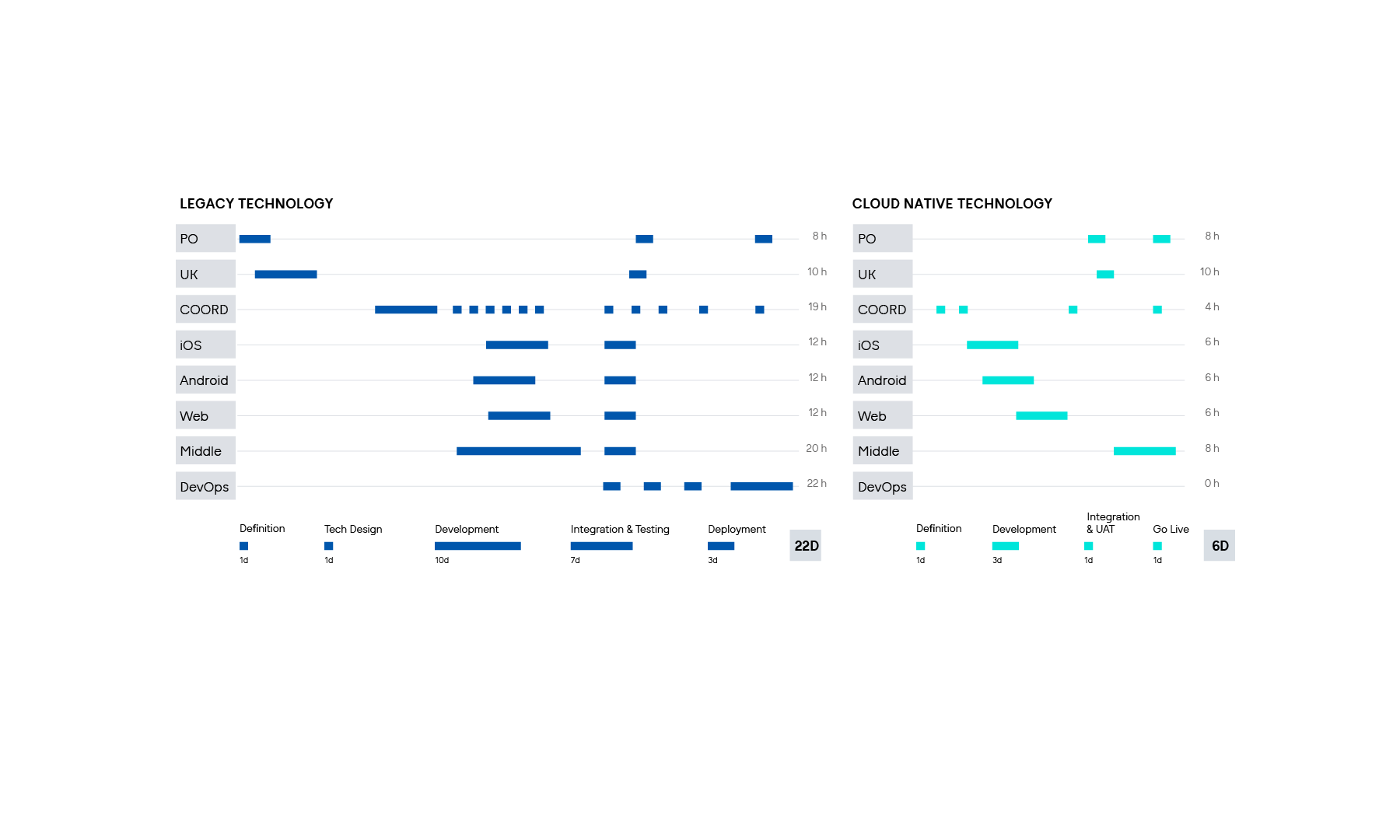
Go digital 3x faster than previously possible
Go digital 3x faster than previously possible
Speed and agility are essential in modern banking. With BankLiteX you are empowered to participate in the growing financial ecosystem quickly, while state-of-the-art business processes maintain continuity and data integrity.
Reduce development costs by 40%
Redefine the economics of banking. With BankLite’s open architecture, new components can be added easily and products can be ready to launch in weeks, with minimal development.
Generate new revenue streams with open banking
In the age of open banking, you must be open to new business models. As a cloud-native, microservices platform, BankLiteX empowers you to focus on innovation and to deliver compelling customer propositions in context.
Our partners

Advantages of BankLiteX with regards to product development
FAQ: Building the bank of the future
Why are APIs important for digital banking platforms?
APIs are critical to digital banking platforms because they enable banks to connect their systems with fintech partners, payment providers, and external services. This connectivity allows financial institutions to build flexible ecosystems that expand and enhance their service offerings.
With an API‑driven architecture, banks can rapidly launch new products, integrate third‑party capabilities, and deliver personalised customer experiences. APIs also underpin open‑banking initiatives, enabling banks to participate more effectively in wider digital financial ecosystems.
To explore how API‑enabled architectures support next‑generation banking platforms, download the full report.
How can banks modernise their core systems to support digital transformation?
Banks can modernise their core systems by adopting modular architectures, cloud‑native platforms, and API‑driven integration layers. This approach allows institutions to phase out legacy components gradually while maintaining operational stability.
Modern core‑banking environments enable faster product development, improved scalability, and easier integration with fintech firms and third‑party services. By decoupling legacy systems and introducing microservices, banks can accelerate innovation and deliver new digital experiences more efficiently.
The full Thought Leadership paper provides detailed guidance on how banks can modernise their technology architecture and accelerate digital‑transformation programmes.
What does “the bank of the future” mean for financial institutions?
The bank of the future is a financial institution built on modern, flexible technology foundations that support digital‑first services, rapid innovation, and seamless customer experiences. These banks rely on cloud infrastructure, open APIs, and modular platforms to deliver new products quickly and integrate with fintech ecosystems.
Traditional banking systems often struggle with legacy technology that constrains agility and increases operational costs. Modern digital‑banking platforms enable institutions to scale their services, personalise customer interactions, and respond more swiftly to changing market demands.
For deeper insights into the architecture and strategies underpinning next‑generation banking platforms, download the full report.