Canada is preparing to adopt Open Banking in 2026 following considerable excitement. The Federal Government set aside money in the 2025 Budget to create the first "Consumer-Driven Banking Framework" with preliminary rules scheduled for release in early 2026.
The Bank of Canada will oversee this initiative, ensuring compliance, and accreditation. This shift represents a significant transformation for the financial sector, particularly for fintech companies, credit unions, and Tier‑2 banks
Open Banking will introduce fresh regulations to ensure safe data access, improve digital financial services and transform how organizations interact with external providers. GFT is ready to support these institutions in successfully navigating this evolving environment.
Implications of Open Banking for Canadian Financial Institutions
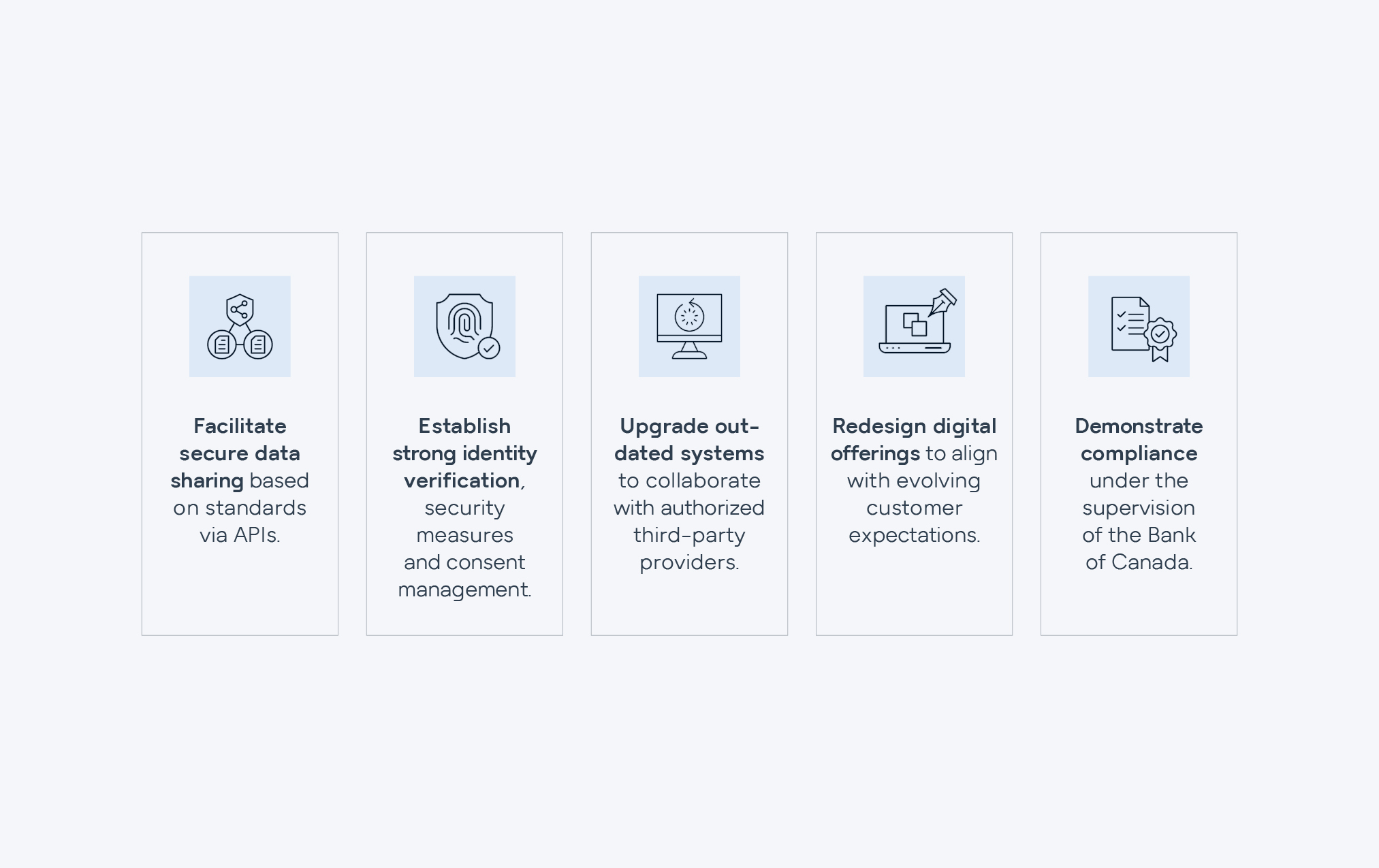
The forthcoming framework will necessitate those institutions to:
For smaller groups like credit unions, challenger banks and new fintechs, the main challenge is not willingness. It is about having enough resources, expertise and time. This is where GFT can offer support.
GFT Support for Canadian Fintechs, Credit Unions & Banks
GFT is a well-known global partner of Microsoft, AWS and GCP. It is an ECIF-certified delivery partner. GFT is also skilled in Open Banking systems, digital banking improvements, payment innovations and cloud transformation.
1. Development and Implementation of Open Banking Frameworks
We support financial institutions in constructing the comprehensive technological infrastructure necessary for Open Banking, which encompasses:
- API management and developer platforms;
- Digital identity and consent systems;
- Secure data-sharing protocols;
- Integration with current core banking and digital infrastructures;
- Cloud-based operational strategies (Azure, AWS, GCP).
Our accelerators and reference models expedite time-to-market while ensuring compliance with the new Canadian regulatory standards.
2. Upgrading Traditional Core and Digital Systems
Many credit unions and mid-sized banks use old systems. These systems did not design for real-time API integration. GFT offers:
- Strategies for core modernization;
- Cloud migration services (including ECIF-supported transitions to Azure);
- Enhancements for digital banking platforms;
- Modernization of payment systems in line with Canadian RTR and ISO 20022 standards.
We ensure that these institutions can manage new functions. These include account aggregation, personal financial management (PFM) and embedded finance solutions.
3. Assisting Fintechs in Adapting to the New Framework
Fintech companies stand to benefit greatly from Open Banking, but they must comply with rigorous security, accreditation and interoperability requirements. GFT supports fintechs by:
- Preparing for accreditation;
- Developing API-first, compliant solutions;
- Fostering integration with financial institutions;
- Implementing scalable cloud-native architectures;
- Facilitating partnerships with banks and credit unions.
Our work in Brazil gives us valuable insights. We learn about effective strategies, possible problems and safe ways to grow an ecosystem quickly. While Canada’s approach will be more structured and gradual, the insights remain relevant.
Why Act Immediately? The Benefits of Timely Readiness
We will introduce the initial framework in the first quarter of 2026. Organizations that prepare early will have several advantages.
- Better positioning in collaborative partnerships
- Quicker accreditation and compliance readiness
- The chance to introduce new digital offerings at launch
- Access to ECIF funding to help with cloud migration expenses
- Lower operational risks and more seamless system integration
Waiting until late 2026 will cause competition for resources, delays from vendors and rushed compliance efforts. All markets worldwide show this trend.
How GFT Can Assist You in Getting Started Today
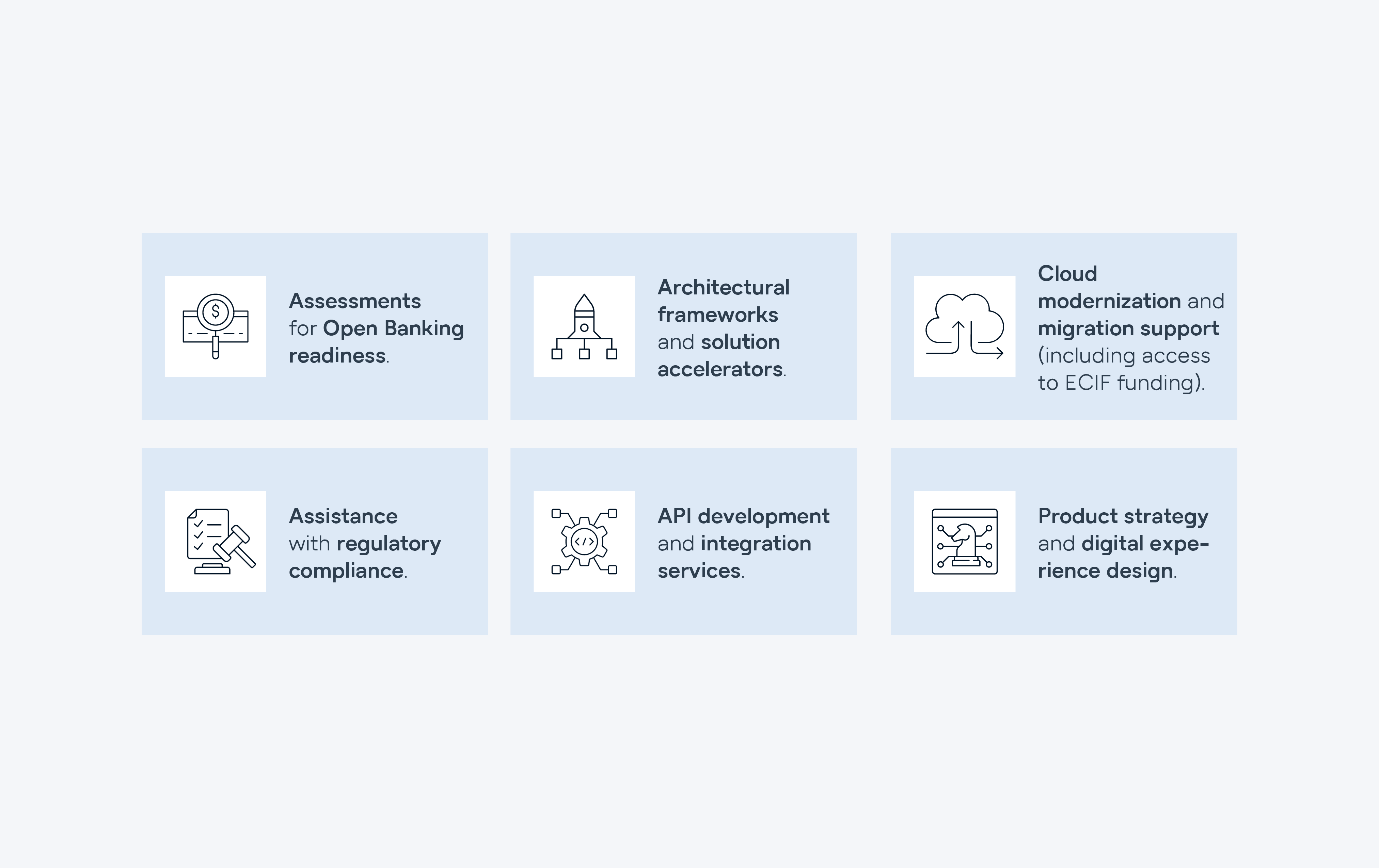
You might be a fintech wanting to grow. You could be a credit union trying to enhance member services. Or you may be a Tier-2 bank preparing for 2026. GFT provides:
A significant opportunity to change the competition in Canada exists.