The Silent Bottleneck Behind Most Data & AI Strategies


It happens in stages, each building on the last. And whether an organization reaches the next stage has less to do with ambition than with something quieter sitting underneath all of it.
The Journey Is Sequential
To understand where the bottleneck truly lies, it helps to look at the stages, organizations move through:
- Modern Data Foundation Enterprise
- Governed Analytics Enterprise
- Predictive Enterprise
- AI-Driven Enterprise
- Autonomous Enterprise
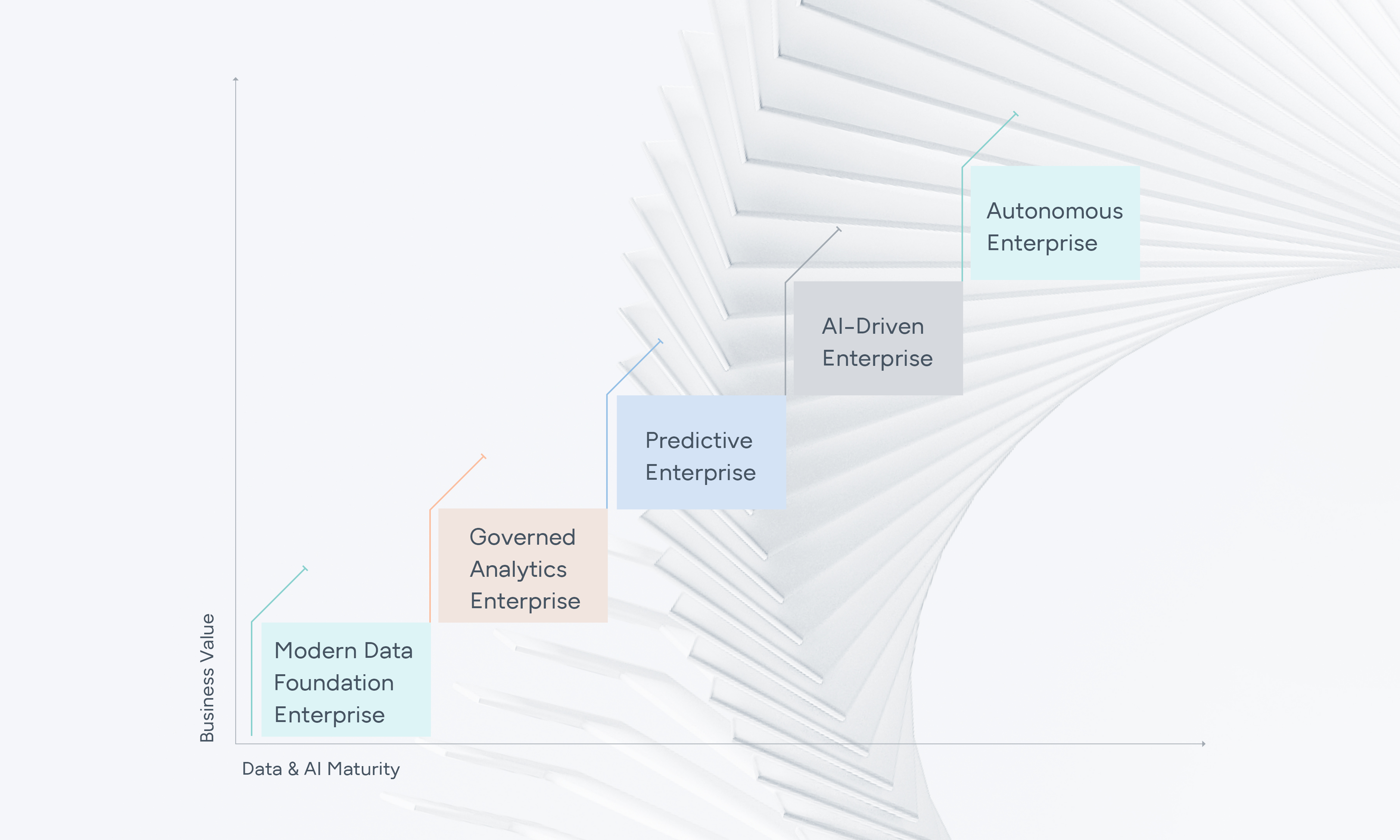
Each stage builds on the last. And each one quietly raises the bar for what needs to exist underneath. Nobody jumps from fragmented MS Excel reporting straight to enterprise AI agents.
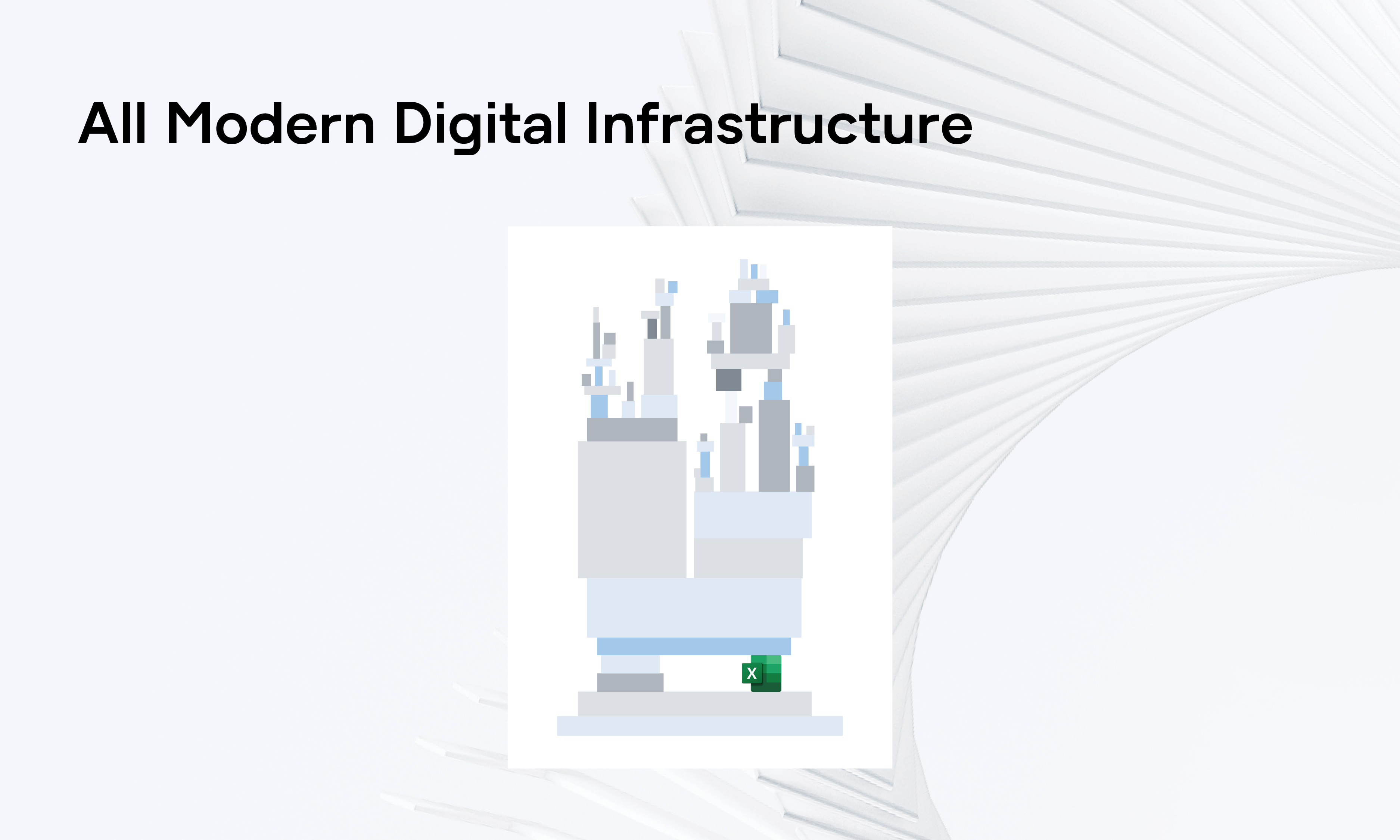
The capabilities in between have to be built step by step. Data and AI maturity isn't a tooling roadmap. It's an architectural dependency chain.
Stage 1: Modern Data Foundation Enterprise
This is where most organizations start: siloed systems, legacy on-premises warehouses, Excel reporting nobody fully trusts, infrastructure costs that keep climbing, data that arrives late, and regulatory pressure quietly building in the background.
The goal in this phase is to get to a scalable, integrated, reliable data foundation. Modernize the warehouse landscape, connect siloed systems into one data layer, replace manual reporting with automated pipelines, build trusted datasets for finance, risk, and compliance.
It’s not the part of the journey people get excited about. But without it, everything that comes next becomes fragile.
Stage 2: Governed Analytics Enterprise
Once the foundation exists, a new problem shows up: trust.
Different departments report different numbers for the same KPI. Nobody is sure who owns which dataset. Lineage is missing. Auditors ask uncomfortable questions. Business teams still depend on IT for every report.
The goal is to make data trusted, consistent, and usable for decisions. That means governance: ownership, access policies, lineage, a real catalog. A trusted KPI and semantic layer, so "revenue" means the same thing in every team. Self-service analytics without chaos. Honest data quality monitoring.
This is where data stops being an IT asset and starts being a business asset. A lot of organizations reach this level. Fewer get past it.
Stage 3: Predictive Enterprise
Once the data is trusted, the question shifts from What happened? to What's about to happen?
Organizations begin catching risks earlier, predicting churn, anticipating demand, and turning forecasting into a real discipline. Models move into production instead of sitting on a laptop. Predictive datasets become something multiple teams can reuse.
This is the moment analytics stops describing the business and starts changing it.
Stage 4: AI-Driven Enterprise
Prediction is useful. Embedding intelligence into the flow of work is a different kind of shift.
This is where AI shows up inside daily work. Knowledge assistants that search across internal documents. Document intelligence that reads contracts, claims, and reports automatically. Copilots supporting employees in daily decisions. Conversational AI that changes what customer interactions feel like. And critically, governance and trust frameworks to make all of it safe at scale.
A lot of organizations have GenAI pilots. Very few have scaled them across the enterprise. This stage is about closing that gap.
Stage 5: Autonomous Enterprise
At the far end, agentic AI systems plan, decide, and execute on their own. Agents handle multi-step processes end-to-end. Claims, approvals, investigations - coordinated by agents working across systems. Governance and observability frameworks keep it all transparent and under control.
Almost every organization is curious about this stage. Very few are ready for it, because autonomy without the four stages beneath it is dangerous.
Where Organizations Actually Get Stuck
Most organizations don't fail their Data & AI strategy because of models. That bottleneck is usually the platform underneath the strategy, chosen before anyone expected it to limit what came next. The stages themselves aren't the risk. The risk is choosing a platform that only supports the stage the organization is currently in.
Describing the stages is the easy part. Moving between them is where things go sideways.
The pattern is almost always the same. An organization invests heavily in whatever stage is currently working. Dashboards get polished. Reporting matures. Everyone is productive. Then the next stage arrives and whatever enabled all that success quietly becomes the thing getting in the way.
This is the tension between exploitation and exploration. Exploitation means squeezing more value out of what already works. Exploration means trying new things, new data, new, new use cases, new ways of working. Both matter. Lean too hard into exploitation and the organization optimizes its way into irrelevance. Lean too hard into exploration and the operational ground disappears underneath.

A Lesson History Keeps Repeating
This pattern isn't unique to data platforms. It shows up every time organizations optimize around a successful foundation longer than the foundation can support their next move.
- Nokia was the undisputed king of mobile phones. Devices that worked, a world-class supply chain, a global brand. The company kept optimizing what worked, underestimating how fast smartphones would reshape the category. By the time it responded, the conversation had moved on.
- BlackBerry defined business mobility for a generation. Executives swore by the keyboard, the battery, the security. But that model got so heavily exploited that exploration of a touchscreen future barely happened. A few short years later, the market had moved on and BlackBerry never caught up.
- Kodak literally invented digital cameras. Then it spent years defending the film business instead of exploring the future it had created in its own labs. By the time it changed course, the industry was already past it.
- Yahoo had the traffic, the brand, the early lead. But it kept refining yesterday's products while Google and others explored what the internet was becoming. The gap widened slowly, and then all at once.
None of these companies failed because their current products stopped working. They failed because their current products kept working - a little too well - and the organizations around them stopped exploring what came next.
Exploitation without exploration looks like success, right up until it doesn't.
Organizations polishing yesterday's dashboards while ignoring predictive models and intelligent workflows aren't standing still. They're falling behind, at exactly the moment when the field is accelerating.
Why This Matters More Than Ever
Ten years ago, an organization could spend half a decade optimizing reporting before the pressure to move beyond it arrived. That's gone. The shift from analytics to AI now happens in months. Copilots, retrieval-augmented generation, vector search, agent workflows, all of this has moved from experimentation into production in under two years.
Platform limitations that used to take five years to surface now show up in eighteen months. The cost of a platform built only for today compounds faster than it ever has.
What an AI-Ready Platform Looks Like
A platform that can carry an organization through the full journey has to enable progression across every stage, without forcing an architectural reset between them. Foundation-level integration, enterprise governance, analytics, machine learning, generative AI, and agent orchestration, all on the same data, under the same governance model.
Modern unified platforms, Databricks is a good example, are designed around exactly this principle. One environment supports the whole progression: a shared foundation, governance through Unity Catalog, analytics and machine learning on the same datasets, and native support for generative AI and agent-style workflows, all under one access model. Stage transitions stop being migrations and become activations - the capability for the next stage is already there, waiting to be turned on.
That's what separates a platform from a partner. A platform runs today's workload. A partner carries the organization into the next stage without forcing a rebuild along the way.
The Bottleneck Most Strategies Discover Too Late
By now the silent factor has a name.
The biggest risk in any Data & AI strategy is choosing a platform built only for today.
Not because today's platform is bad. Not because today's strategy is wrong. But because every limitation baked into that choice quietly becomes the bottleneck on tomorrow's ambition. If reaching the next stage of the Data & AI maturity journey requires migrating to an entirely new platform, the organization has already created a massive strategic and operational burden for itself.
Organizations that choose platforms optimized only for one phase of the journey will keep exploiting that phase and slowly forget to keep an eye on the next one.
As a common example, I've seen this pattern many times. Organizations adopt a Business Intelligence (BI) service and invest heavily in building dashboards and polished reporting experiences. Many of those reports go unused. BI was once the golden standard. But it's losing momentum. So, the question is: Is such an organization ready for the next stage? Has anyone been exploring the next stage? Or does the platform quietly not allow it?
Organizations that choose platforms designed for the full journey build intelligence, and the freedom to keep moving. In the coming years, that difference will decide which companies lead their industry, and which ones spend their transformation budgets rebuilding what they already have. Because at the end of the day, Data & AI strategy is supposed to support the business strategy.
And the question for any organization starting its next data initiative is a simple one: Is the platform underneath pulling it toward the next stage or quietly holding it in the current one?
Got Questions? We’re Happy to Help.