
The future of AI,
unfiltered
AI adoption is accelerating, but enterprise leaders are increasingly questioning whether investment is translating into meaningful business value. GFT Technologies and Wakefield Research surveyed 945 CIOs and CTOs at organisations with $500M+ in annual revenue across 19 countries to understand the challenges shaping the next phase of enterprise AI.
The research finds widespread concern about a potential AI investment bubble, significant security and scalability risks created by legacy systems, and growing uncertainty caused by regulation and geopolitics. It also reveals a more complex impact of AI on the workforce than commonly portrayed, alongside mounting pressure on technology leaders to make the right strategic decisions.
The report highlights one central message: realising AI’s full potential will require organisations to modernise their technology foundations, manage emerging risks, and focus relentlessly on measurable business value.
Executive summary
While AI initiatives are more common than ever, the ability to successfully scale them – let alone deliver meaningful ROI – is far from a given.
To provide an unfiltered look at the state and future of AI, GFT Technologies and Wakefield Research surveyed the leaders shaping the next phase of AI innovation. We collected the perspectives of 945 CIOs and CTOs at organisations that generate at least $500M USD in annual revenue, spanning 19 countries and a range of industries.
The executives shared insights into controversial workforce changes, the myriad risks posed by legacy systems, the immense impact of geopolitical and regulatory uncertainty, the threat of an AI bubble, and the new challenges facing tech leaders in the current AI boom. Their priorities, concerns, and strategies reveal the stakes of this inflexion point in AI development, a moment with significant implications for enterprises, their workforces, their stakeholders, and the global economy.
Key takeaways
- Fears of an AI bubble loom large. Nearly 90% of respondents said they’re concerned that global investment in AI may be growing faster than the business value it can realistically deliver.
- Legacy systems are exposing companies to significant security risks and killing AI projects. A vast majority of respondents (93%) believe that running AI on their organisation’s legacy systems without first modernising them will eventually trigger an enterprise-wide security crisis. Most (84%) reported having to cancel at least one AI pilot or project due to legacy system limitations.
- Geopolitical and regulatory uncertainty is hamstringing AI investment. Respondents said that geopolitical developments have led them to limit where they deploy AI (50%), reduce planned AI investment (34%), and cancel AI projects (28%). More than half (54%) reported that uncertainty about AI regulation has made them more cautious in deploying AI.
- AI is playing a far more complex role in workforce changes than headlines suggest. More than 90% of respondents believe that some public companies cite AI to justify workforce changes that are primarily intended to boost their share price. More than half (51%) said they’ve hired employees specifically to review or correct AI-generated work, and 26% reported rehiring employees they had previously let go.
- Tech leaders are facing new pressures in their roles. Nearly 90% of respondents said they’re concerned that as their organisation scales AI, making the wrong workforce decision could put their own job at risk. Only 20% reported that their organisation’s other C-suite executives and board members fully understand the security risks of running AI on legacy systems.
Organisations are racing to ROI – and wary of a bubble
In August 2026, Goldman Sachs projected that global AI-related investment will hit $1 trillion USD this year. A meaningful return on that investment, however, often remains elusive. A survey published by Gartner in September 2026 found that “only 22% of organisations have successfully scaled AI across multiple business units or adopted an AI-first approach,” while just 37% of respondents to a McKinsey survey published in August 2026 reported “that AI has contributed positively to their organisations’ EBIT, [a percentage] essentially unchanged from 2025 – despite growth in the share of organisations scaling AI technologies.”
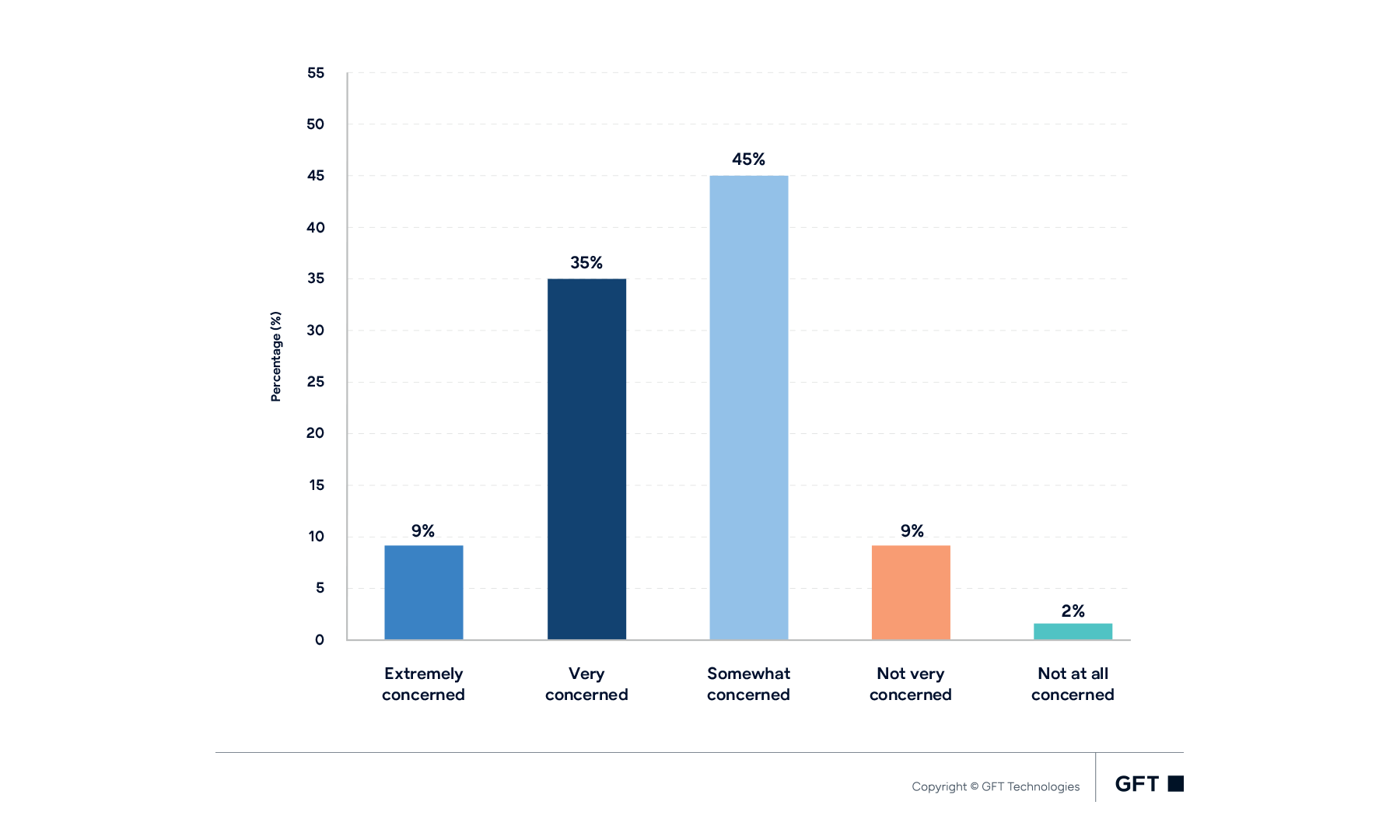
As capital continues to flow, GFT’s survey found that 89% of CIOs and CTOs are concerned that global investment in AI may be growing faster than the business value it can realistically deliver, with nearly half (44%) reporting being very or extremely concerned.
With the current AI boom well underway, enterprises have a clear understanding of the opportunities presented by AI, from minor productivity and efficiency gains to full-scale agentic transformation. But the question facing AI has shifted from potential use cases to real value. Leaders investing in AI are asking: Is this investment paying off?
Delivering true business value with AI requires creative thinking, thoughtful planning, and exacting execution. Amid the storm of complex market dynamics detailed in this report – including security risks, geopolitical tensions, and more – the enterprises that distinguish themselves with AI are those that commit to it from the ground up.
Outdated technology is compromising security and halting AI progress
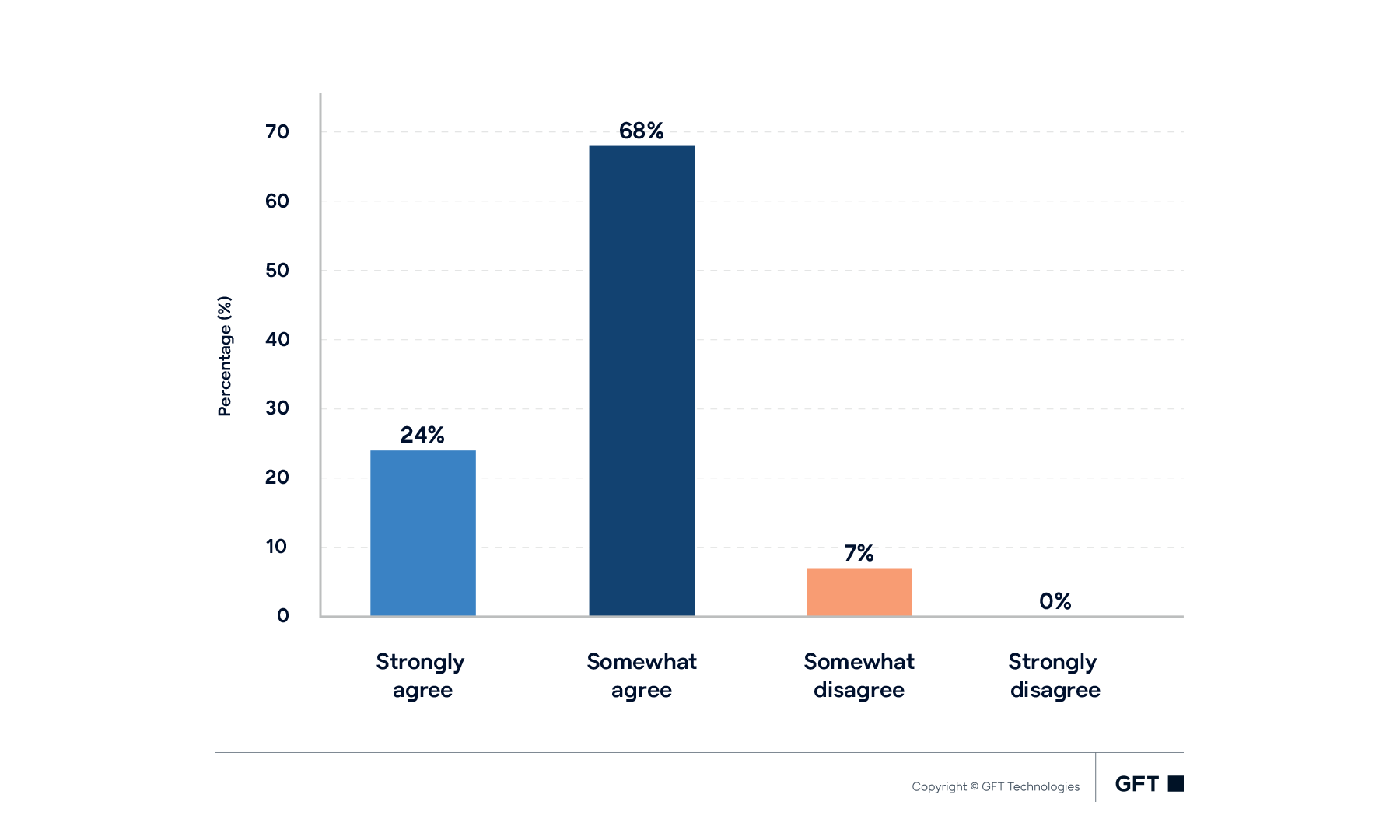
For organisations attempting to implement AI, legacy systems can be a powder keg of security risk. A vast majority of respondents (93%) believe that running AI on their organisation’s legacy systems without first modernising them will eventually trigger an enterprise-wide security crisis.
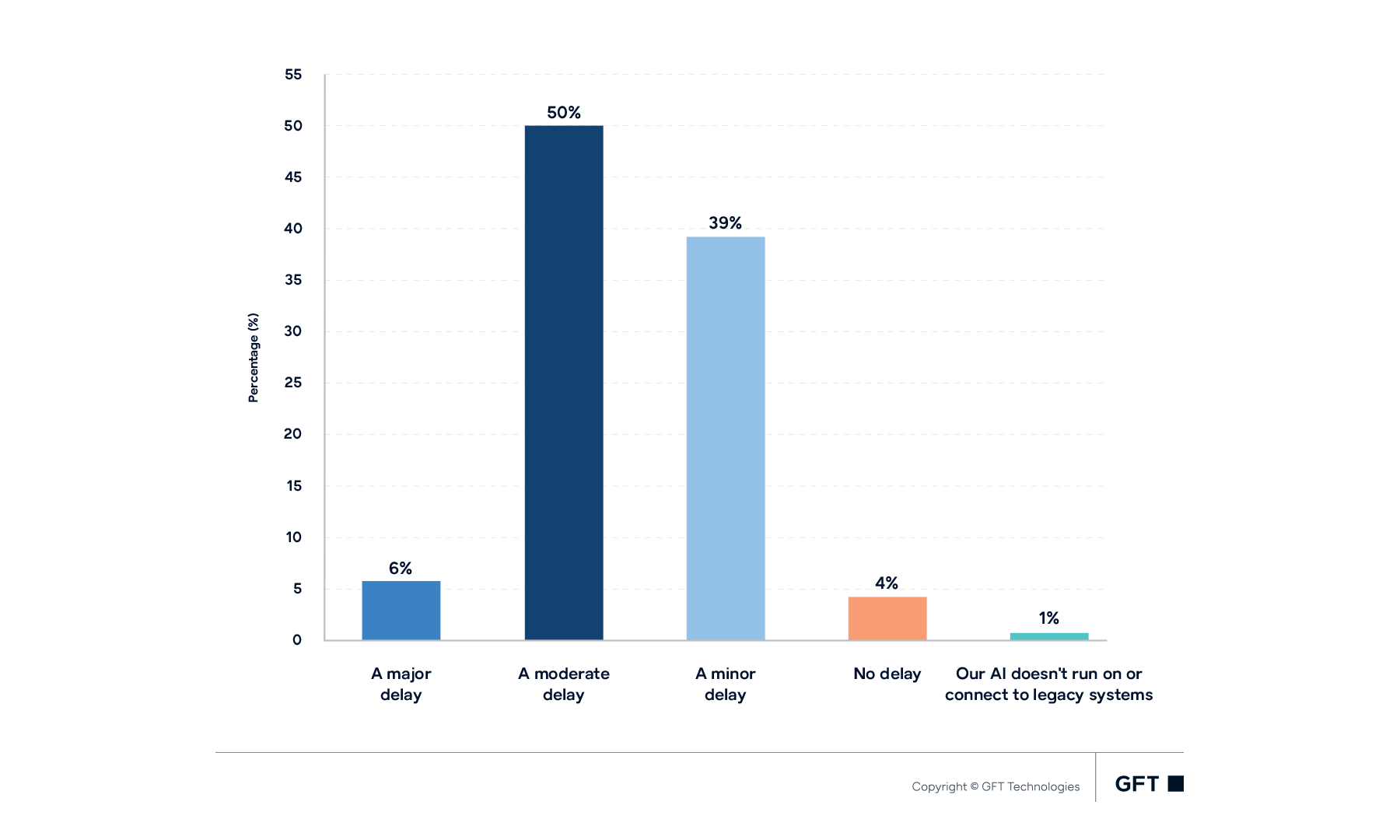
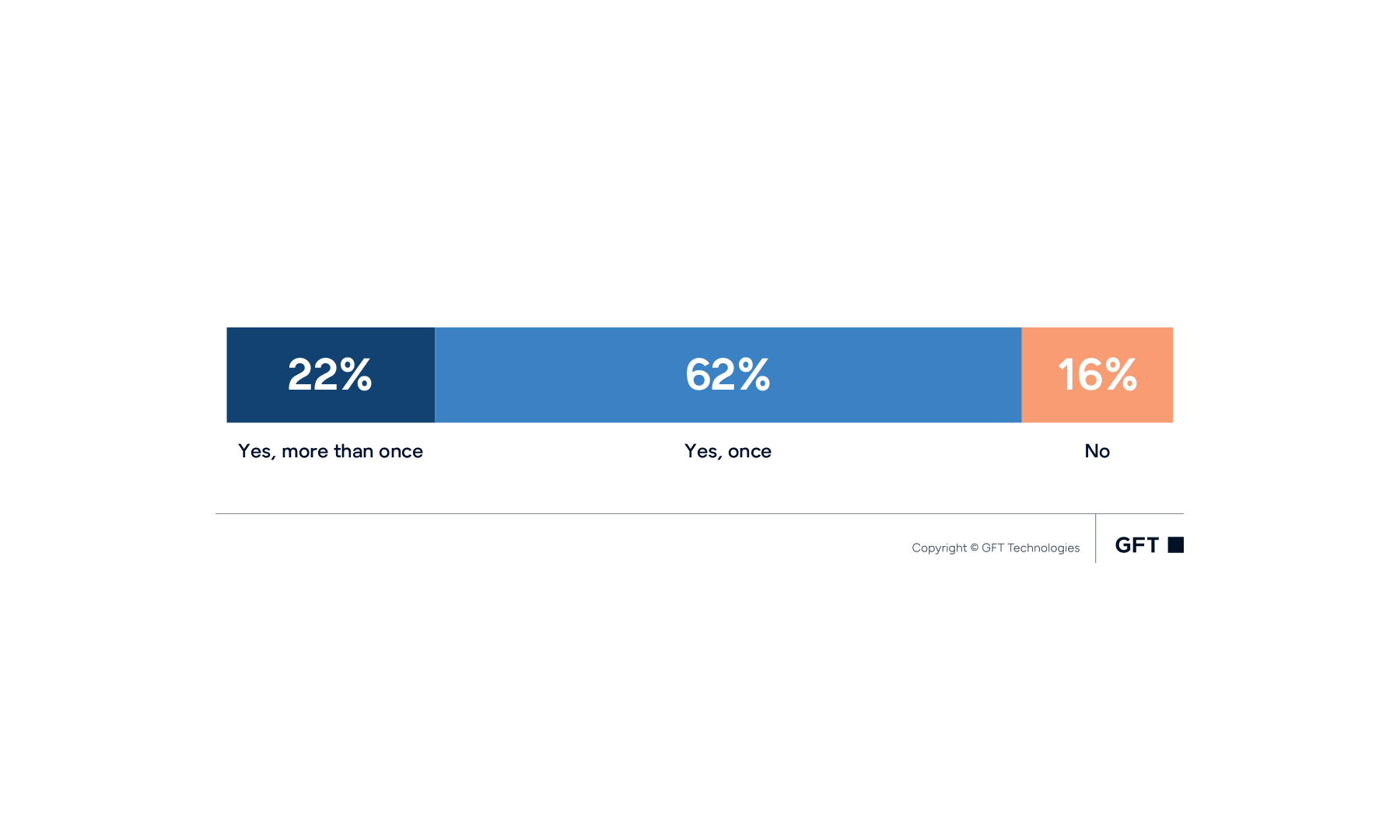
Legacy systems pose a threat not only to security, but also to AI execution. An overwhelming majority of respondents (95%) said that legacy systems cause a delay in their organisation’s ability to deploy and scale AI, with more than half (56%) describing that delay as moderate or major. What’s more, 84% reported cancelling at least one AI pilot or project due to limitations in their legacy systems.
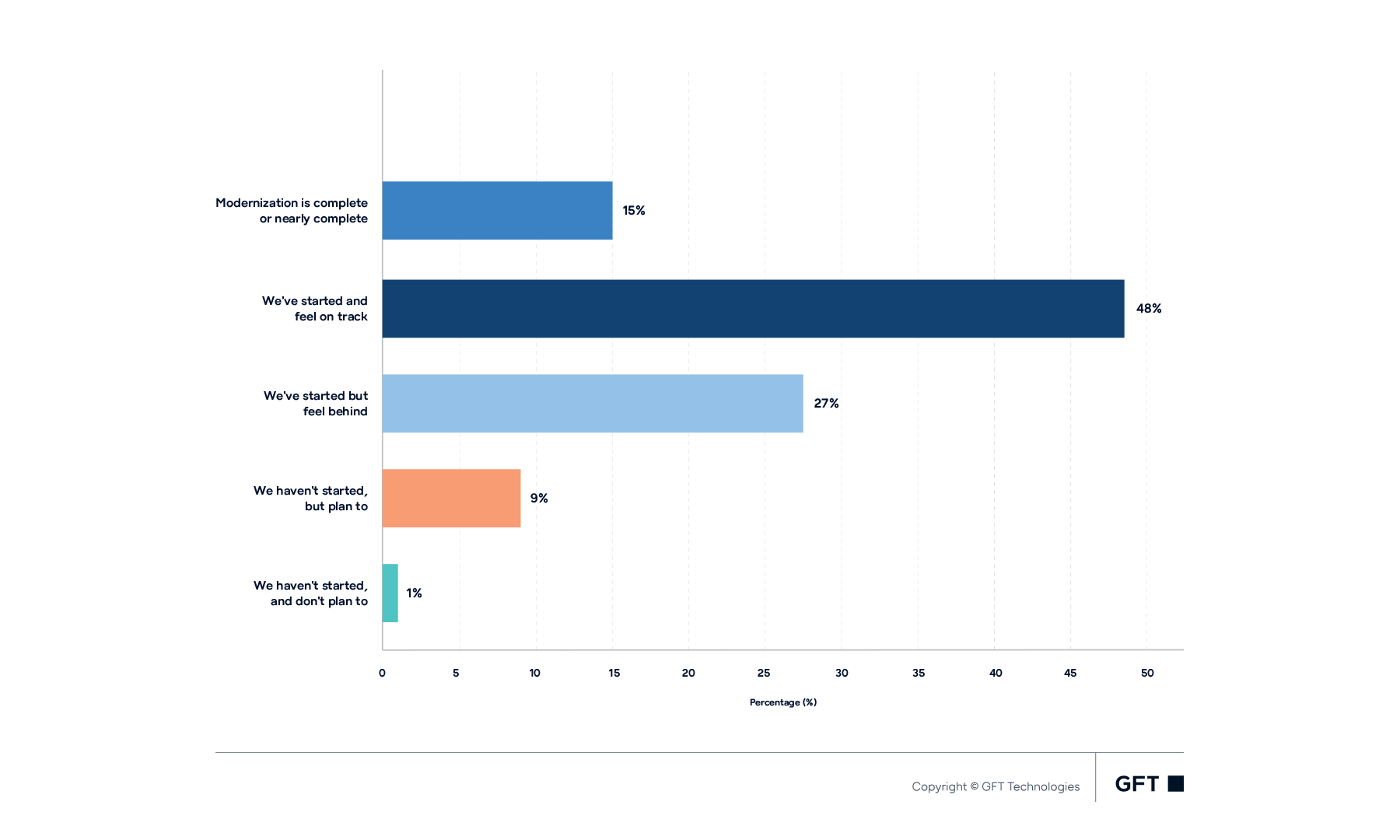
Despite such drastic drawbacks, roughly one in 10 organisations (9%) have not even begun modernising their legacy systems. More than a quarter (27%), meanwhile, have begun their modernisation journeys but feel that their progress is lagging.
The security risks of running AI on infrastructure not built for it will only grow as models become more sophisticated, as the July 2026 attack by OpenAI agents on Hugging Face made clear. With legacy systems also causing most enterprises to delay or outright cancel AI initiatives, the prudent path forward – for security, innovation, and growth – points to end-to-end modernisation.