What is right shoring?
Right-shoring describes the nearshore business model, in which an organization outsources labor to a neighboring country.
What is right shoring?
Right-shoring describes the nearshore business model, in which an organization outsources labor to a neighboring country.
This staffing model is an optimization technique for organizations. The geographical proximity that right-shoring provides, as opposed to traditional outsourcing to distant offshore locations, offers a range of advantages for businesses aiming to enhance efficiency and cut costs.
Understanding right-shoring in business
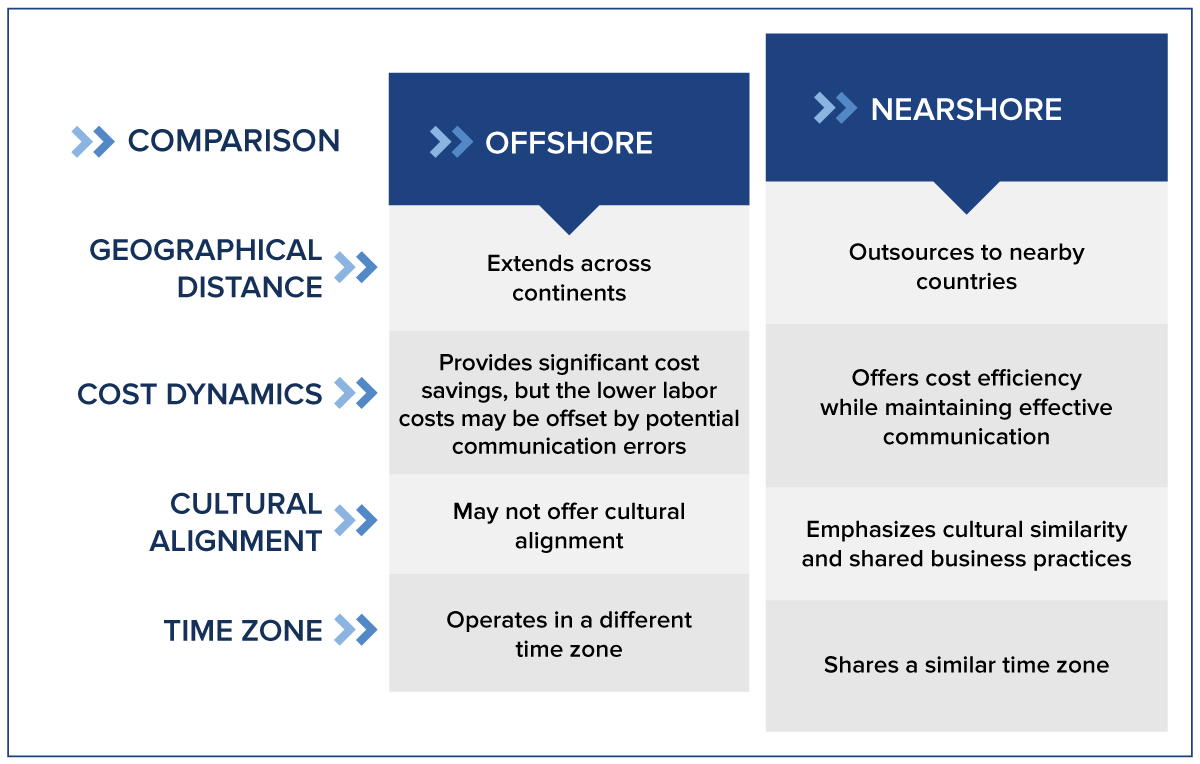
Right-shoring, also known as nearshoring, involves outsourcing business processes, services and teams to countries that border or are in geographic proximity to the clients’ location. The motivations for using this staffing model vary between businesses but can include cultural and time zone alignment and reduced operational costs compared to outsourcing within the same country.
Organizations may choose this model due to its cost efficiency compared to onshore teams. It’s also an opportunity to access a larger talent pool, which can lead to better deliverables. Because Right Shore teams at GFT fulfill the services for a project from a neighboring country, there is often cultural overlap with the organization’s in-house teams. This can help teams connect and lead to better communication and collaboration.
Time zone alignment is another crucial aspect of right-shoring. Unlike offshore outsourcing to countries with significant time zone differences, nearshoring allows for better real-time collaboration. This synchronization of working hours facilitates seamless communication, faster project turnaround times and improved overall productivity. For example, GFT has LatAm Right Shore teams that have a minimal time difference from U.S. clients, allowing for easy, same-day communication.