27 juin 2025

2025 Banking Disruption Index Report

GFT surveyed 200 IT decision makers in banking to better understand how they are implementing AI and where it is driving tangible value.

contact
share
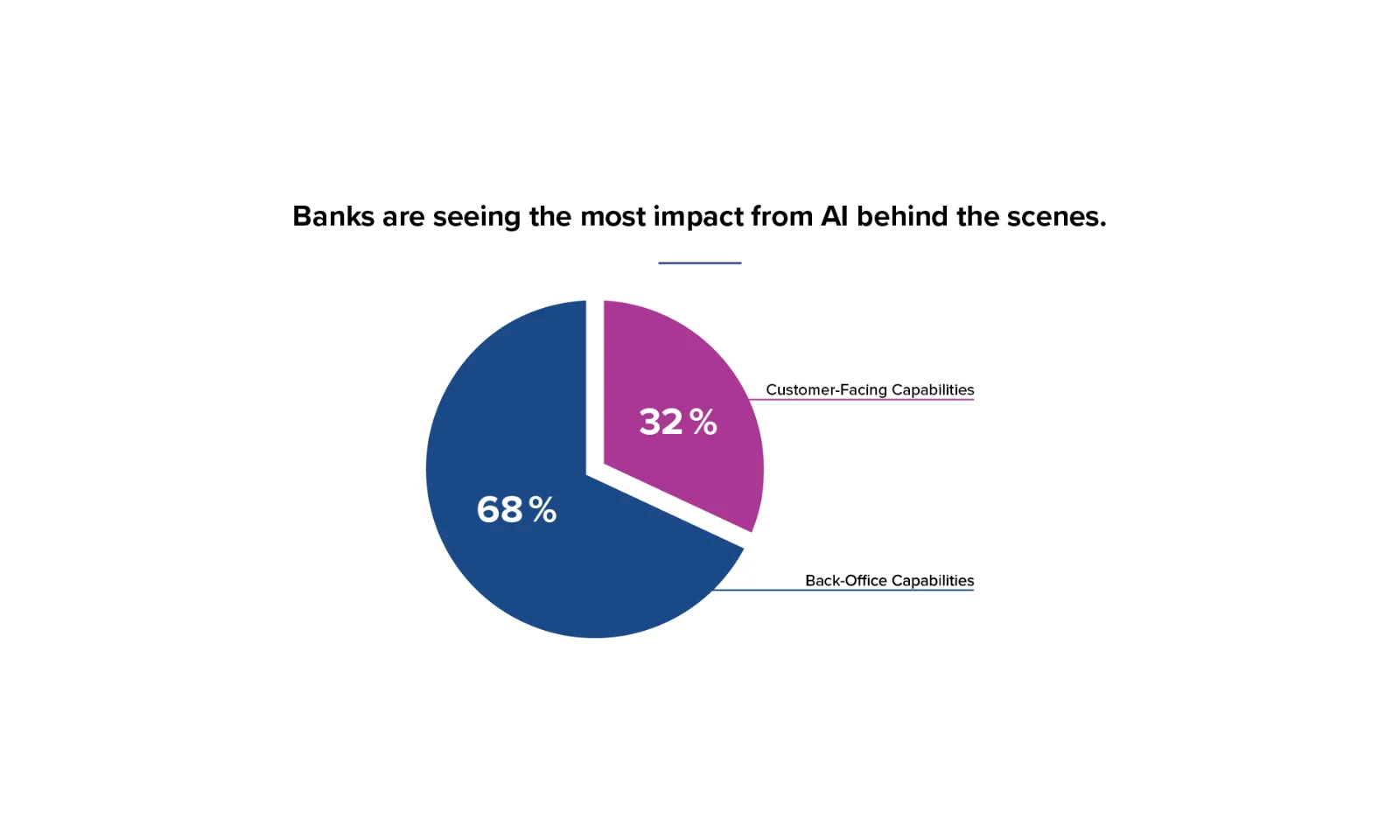
Composite visual containing a minimalist portrait of a man standing against a white wall with dramatic shadowing, alongside a pie chart showing AI’s impact in banking—68% in back-office capabilities and 32% in customer-facing capabilities.
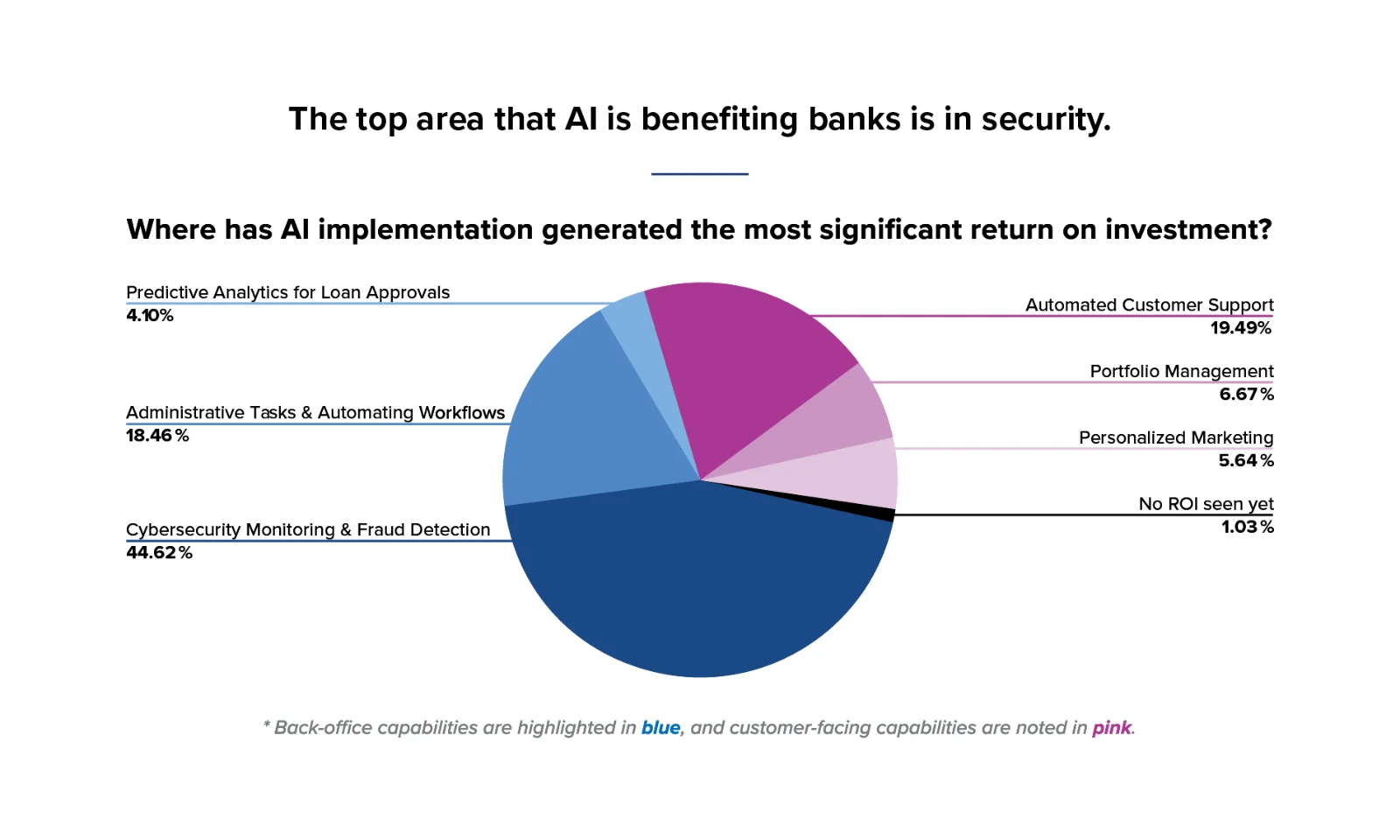
Pie chart illustrating AI return on investment in banking, highlighting top areas such as cybersecurity monitoring and fraud detection, workflow automation, automated customer support, portfolio management, and predictive analytics.
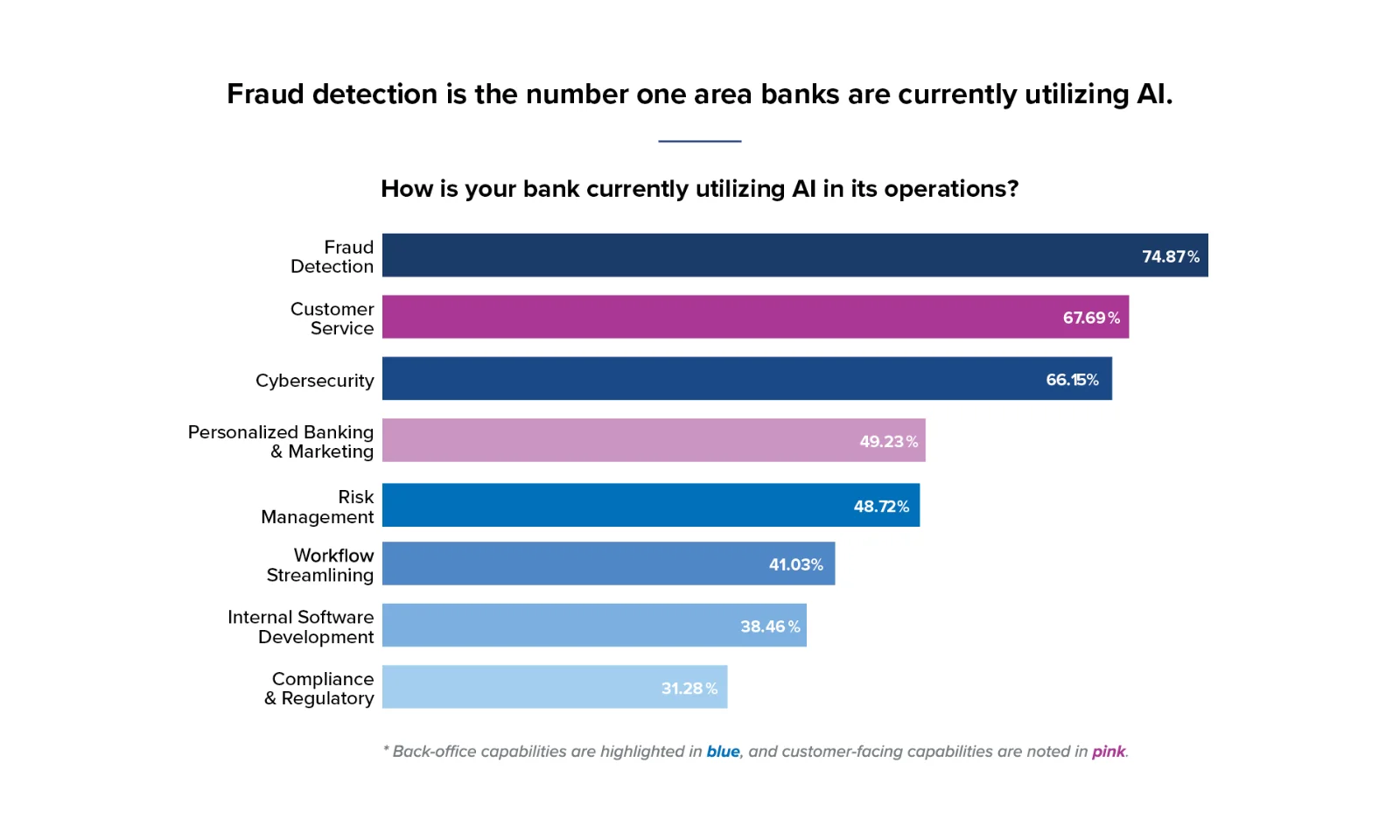
Bar chart showing how banks are using AI, with highest adoption in fraud detection, customer service, cybersecurity, personalized banking, risk management, workflow streamlining, internal software development, and compliance.
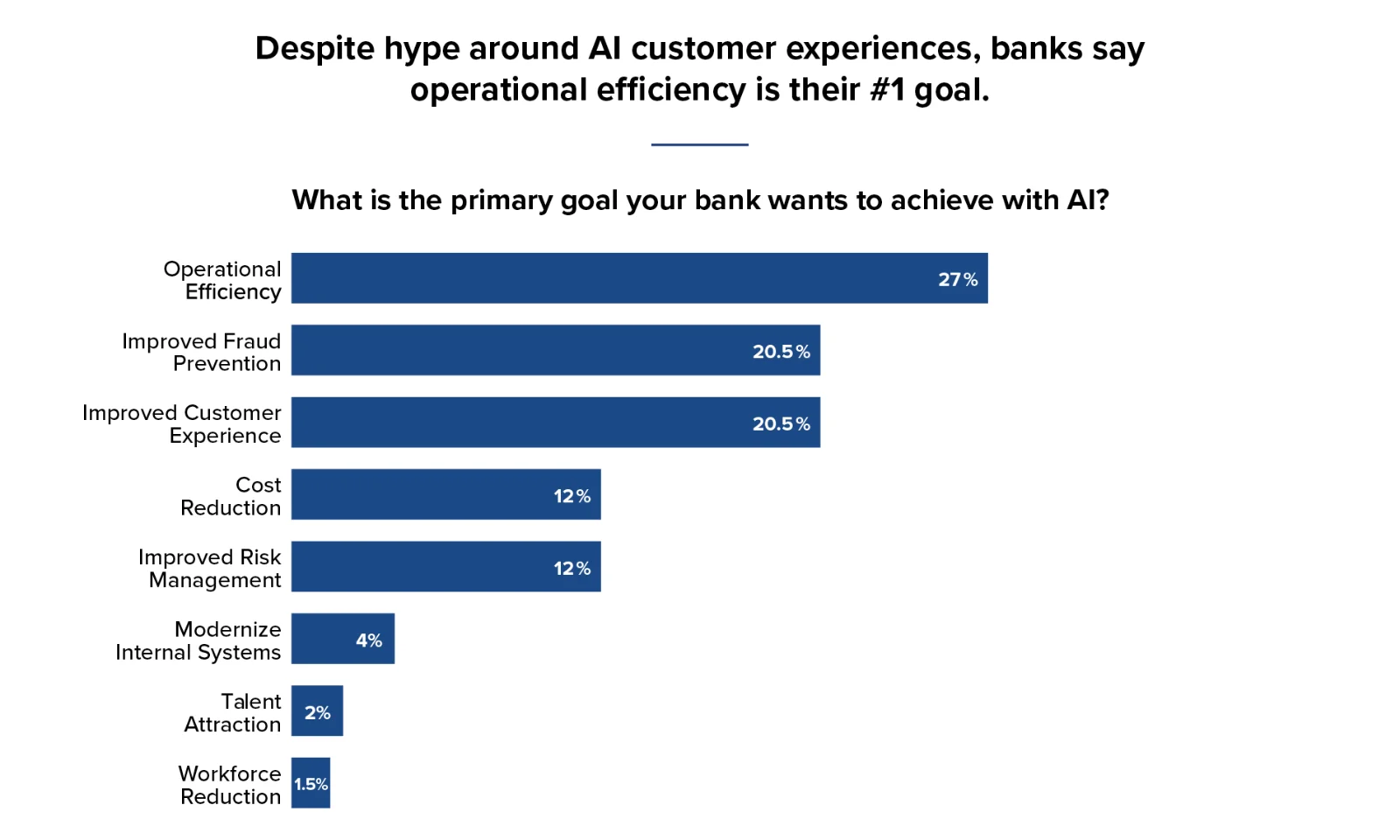
Bar chart showing primary goals banks aim to achieve with AI, led by operational efficiency, followed by improved fraud prevention, enhanced customer experience, cost reduction, risk management, system modernization, talent attraction, and workforce reduction.
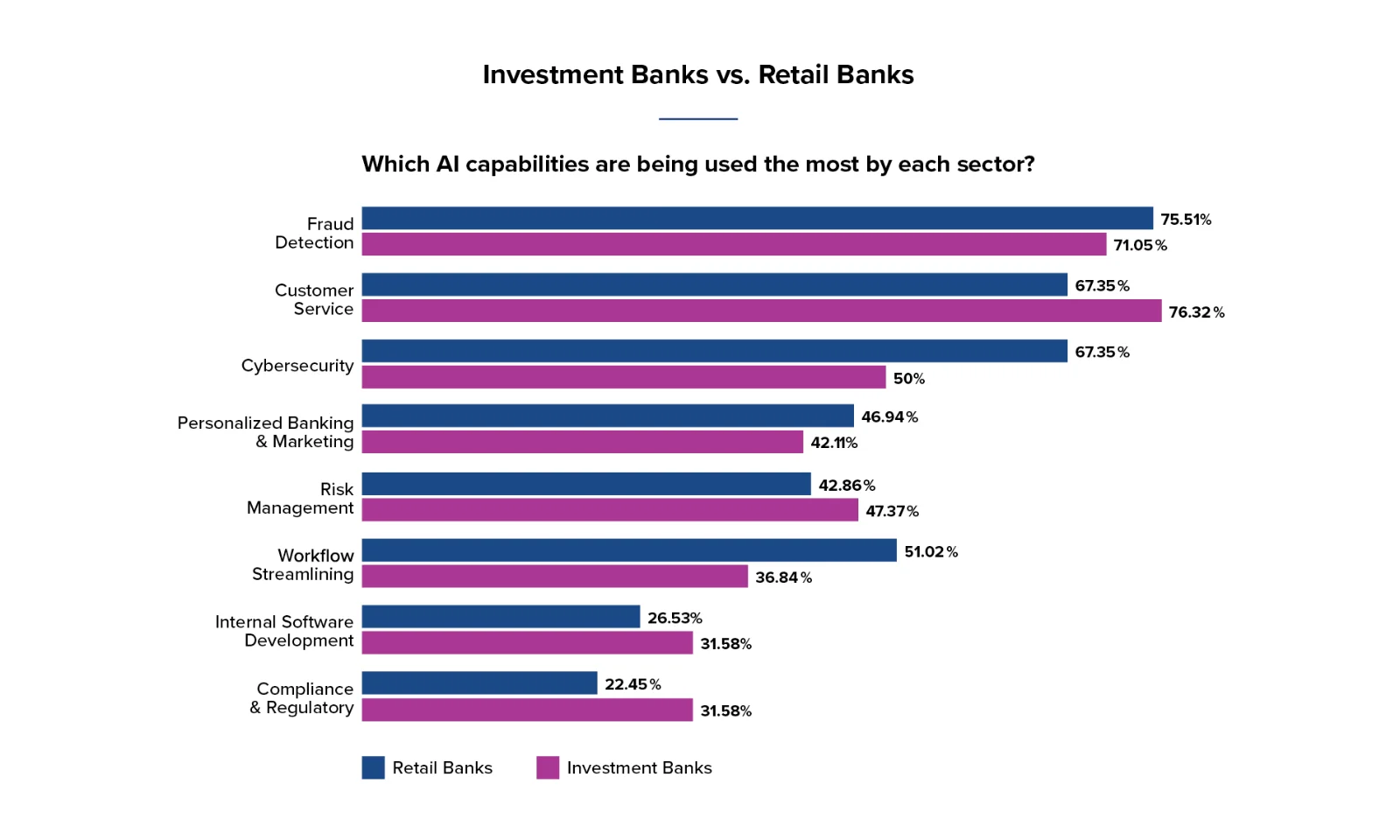
Bar chart comparing how investment and retail banks use AI across key areas including fraud detection, customer service, cybersecurity, personalized banking, risk management, workflow streamlining, internal software development, and compliance.
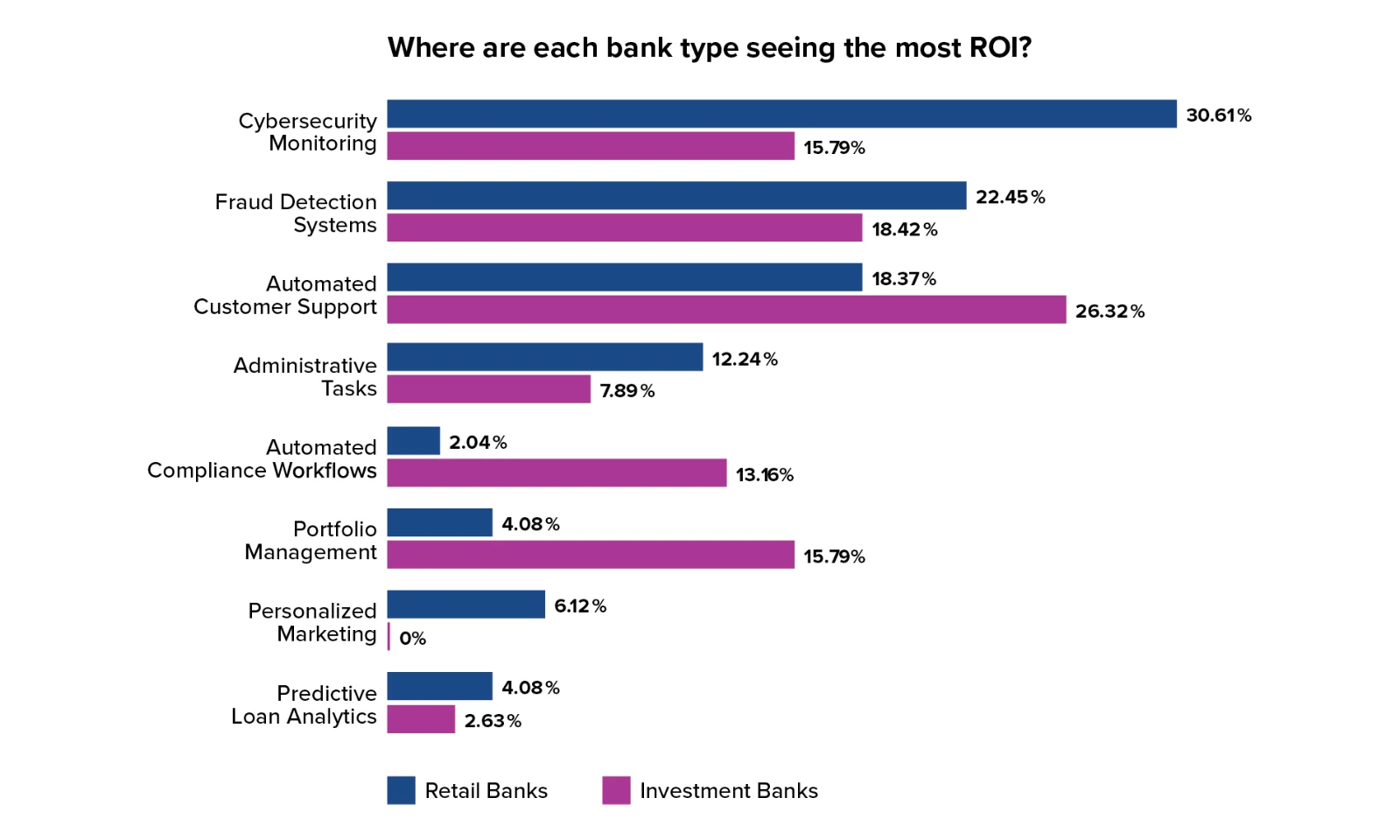
Bar chart comparing ROI from AI initiatives in retail and investment banks across areas including cybersecurity monitoring, fraud detection systems, automated customer support, administrative tasks, compliance workflows, portfolio management, personalized marketing, and predictive loan analytics.
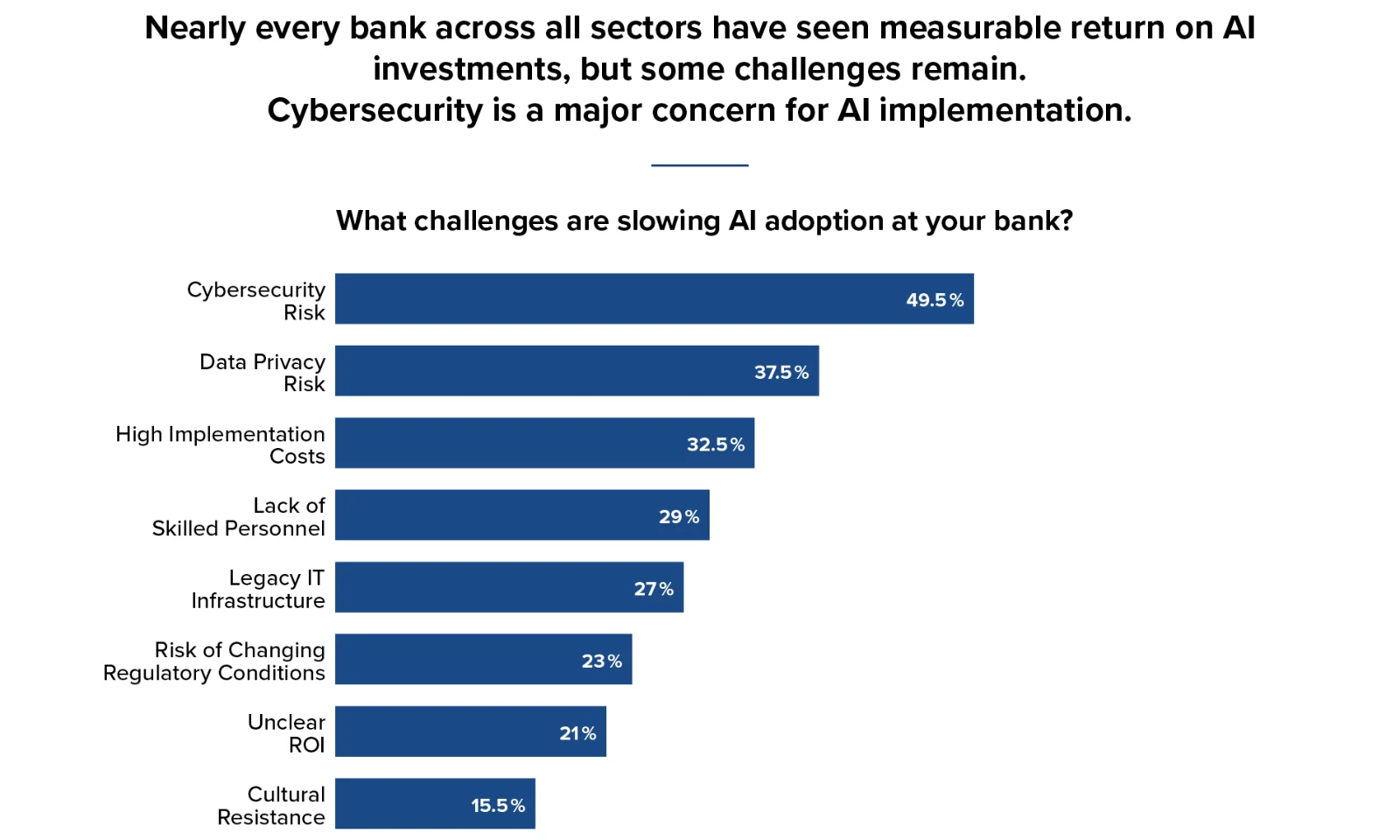
Bar chart showing the main obstacles to AI adoption in banks, including cybersecurity risk, data privacy risk, high implementation costs, lack of skilled personnel, legacy IT infrastructure, regulatory uncertainty, unclear ROI, and cultural resistance.
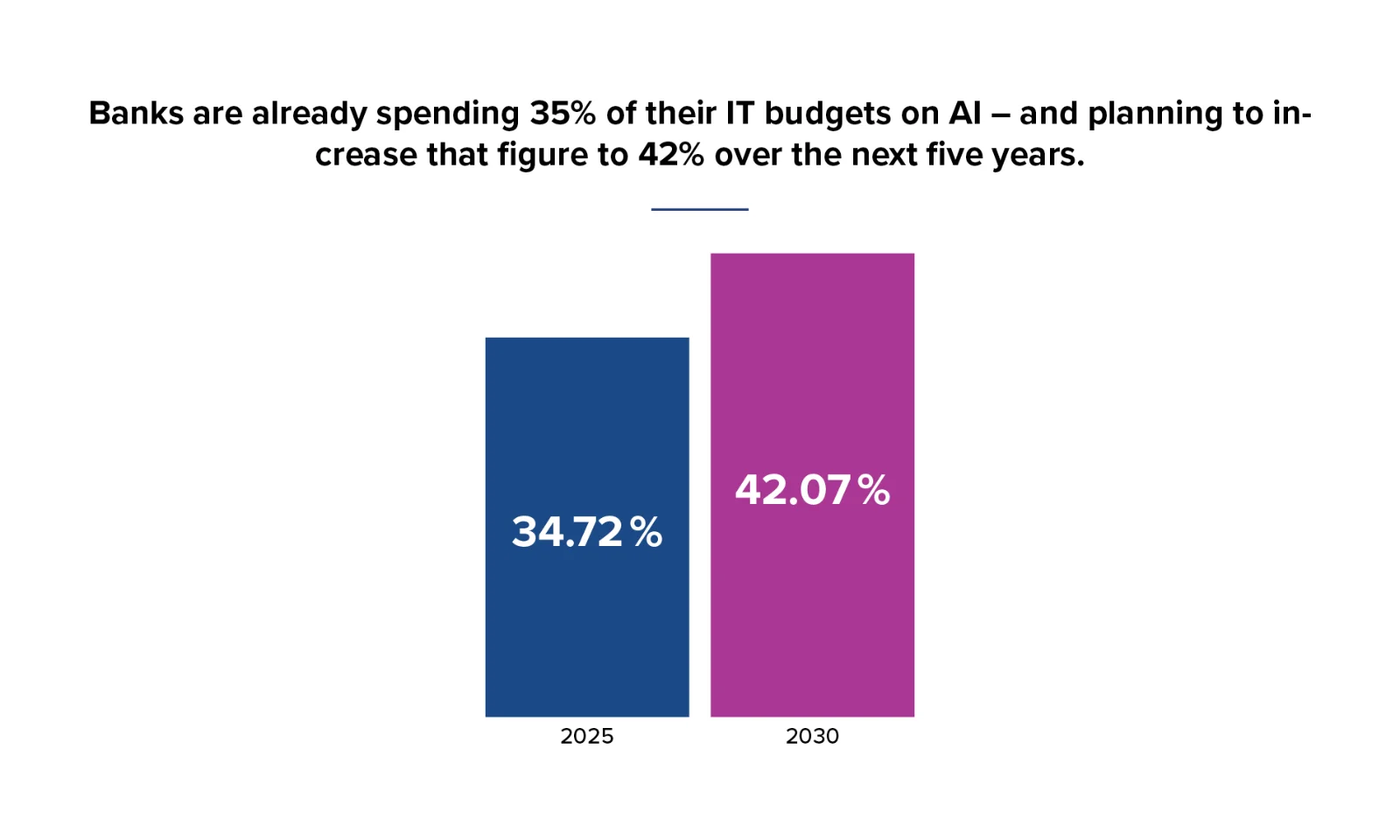
Bar chart comparing banks’ AI-related IT spending, showing 34.72% allocated in 2025 and a planned increase to 42.07% by 2030.

contactFormHead

message
dataProtectionDeclaration