
GFT gender pay gap

Committed to building a diverse workforce and promoting an inclusive culture.

An equality measure

We’re all about building a culture that celebrates local strengths while connecting us on a regional and global level. By putting our People at the heart of everything we do, we create a workplace where everyone, no matter where they’re based, feels valued, supported, and free to be themselves. As we evolve into an AI-empowered organisation, our people strategy is deeply intertwined with this transformation - ensuring that technology enhances human potential, collaboration and drives meaningful innovation. Together, we’re shaping a future of growth, adaptability, and a strong sense of belonging for all. It should be noted that gender pay is an equality measure that shows the percentage difference between the average hourly earnings for men and for women and this is different from equal pay, where men and women doing the same or broadly similar work must be paid the same. The below information is a preview of our latest findings from our gender pay gap (GPG) snapshot date of 5 April 2024 - full report to follow in the coming weeks.

Helping all employees achieve their full potential

We invest in our people, promote diversity, prioritise professional integrity and are fully committed to inclusive practice, where all our employees have a sense of purpose, can be themselves at work and can achieve their full potential. We celebrate inclusion and recognise this is fundamental to ensure our future success.

This is our third gender pay gap report and we believe the results of our actions over the past few years are beginning to be reflected in this data set. We continue to review our people strategy and evolve our approach constantly.

The Gender Pay Gap Challenge – 2024/25

Addressing the gender pay gap remains a complex issue influenced by a range of social, structural, and industry-specific factors. Key contributors include:

1. Gender imbalance in high-paying sectors

Many well-paid industries, including tech and financial services - such as those GFT operates in -continue to be male-dominated, particularly in technical and specialist roles.

2. Underrepresentation in senior leadership

Despite progress, men still hold a disproportionate number of senior and executive-level roles across most industries. Structural barriers, unconscious bias, and historical inequities continue to slow the advancement of women into top positions.

3. Unequal career progression opportunities

While entry-level gender parity is improving, research has shown women maybe still less likely to advance at the same pace as men and this may be due to unequal access to mentorship, sponsorship, and stretch opportunities.

4. Gendered role distribution

Women typically remain overrepresented in support, administrative, and coordination roles.

5. Part-time and flexible work patterns

A higher proportion of women continue to take on part-time or flexible roles with commensurate earnings which will be lower than their full-time comparators.
gft-gender-pay-uk-infographic.png

Progress in Gender Representation – 2024 Update

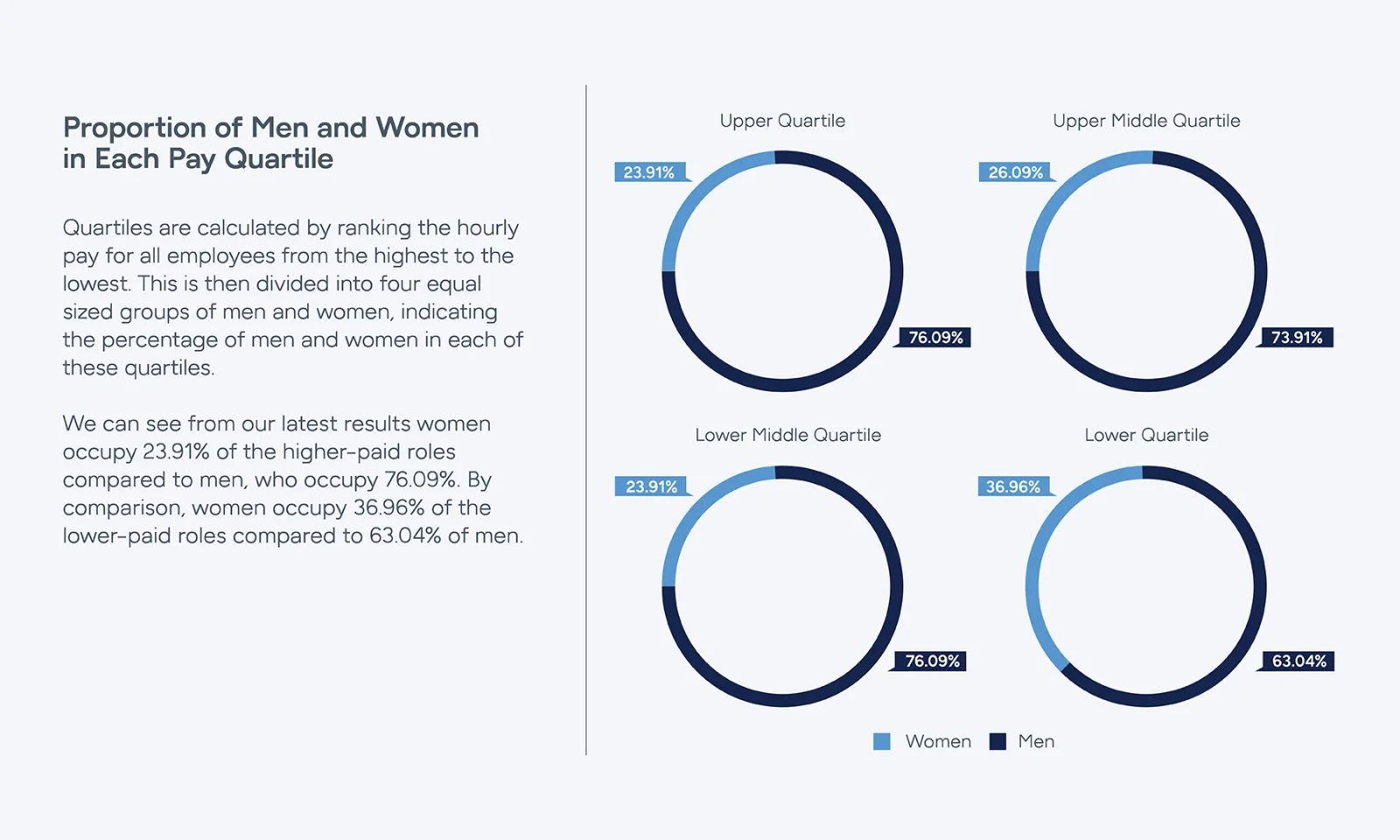
Comparing our April 2024 headcount with that of April 2023, we have increased the number of women in our organisation by 16.67%, rising from 66 to 77 women. This positive shift has also impacted our overall gender employment ratio, with the male-to-female split improving from 76:24 in 2023 to 74:26 in 2024.

Although the beginning of 2024 presented challenges for GFT, particularly within the macro-economic environment, we are encouraged to see continuous improvement in both our overall gender representation and the distribution of genders across all pay quartiles. Notably, we’ve seen particularly strong progress in the lower middle and upper middle quartiles, with incremental gains in the lower and upper quartiles as well.

We continue to make steady progress on increasing the number of women across our organisation- building on a trend that began in 2021 when gender diversity became a strategic priority for GFT in the UK. This commitment remains central to our long-term strategy as we work to build a more inclusive and balanced workforce across all levels of the business.

Our full report will be available in the next few weeks


Responsible employer

As a responsible employer, GFT is committed to fair, safe and healthy working conditions. We believe that having a sense of purpose and self-efficacy in the work that you do is a fundamental prerequisite for individual development. This is underlined by our employer branding strategy ‘Ready to grow’: our open and appreciative corporate culture aims to create an appealing working environment for all employees in which they can express themselves freely and shape their own career paths.


Diversity & Inclusion Policy

With its Diversity & Inclusion Policy, GFT is committed to ensuring equal opportunities for all.

Got questions? We’re happy to help.Judy Pitrakou

Judy Pitrakou_Website Contact (2).png
YOUR CONTACT
Regional People Director for North America, UK, and APAC
dataProtectionDeclaration